 Total Visitors
  Online Users
  Today
Today  Yesterday

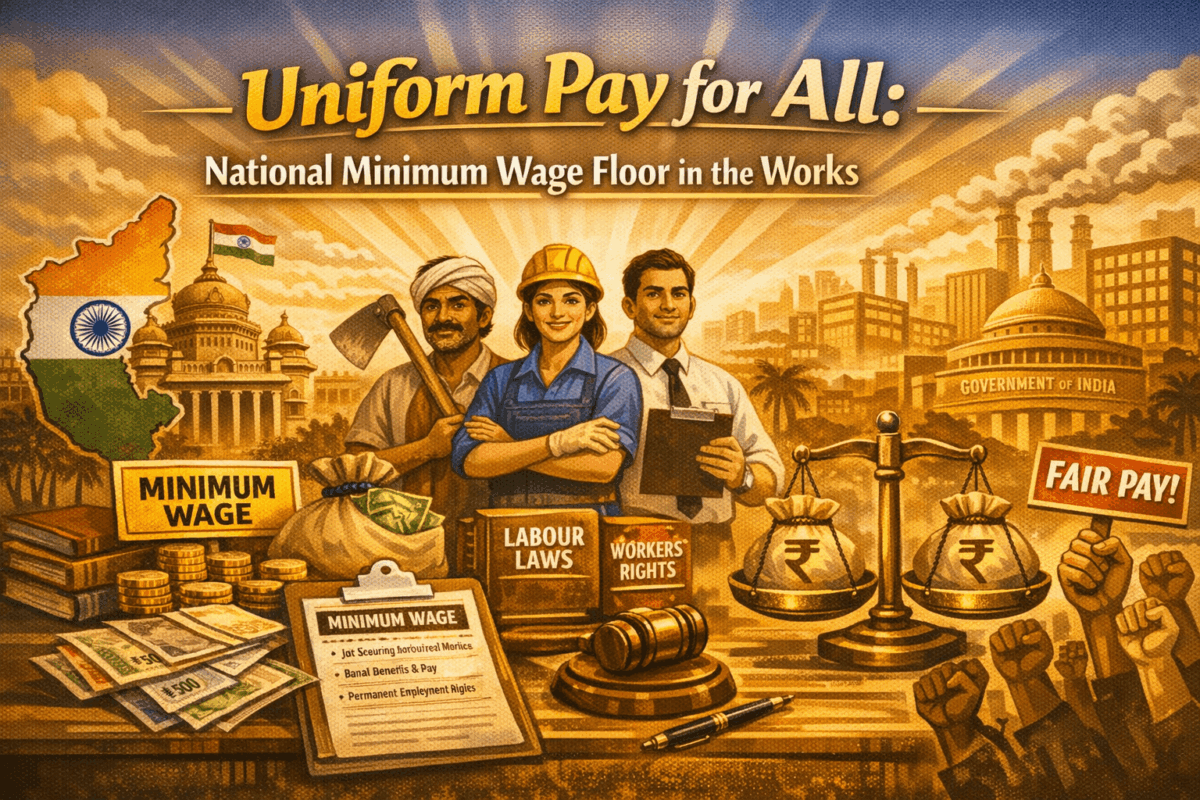
New Delhi, April 17: The Central Government is preparing to introduce a nationwide “Floor Wage” under the Code on Wages, 2019, aimed at ensuring workers across states receive a consistent minimum salary. Officials say the move is designed to reduce industrial unrest by closing pay gaps between neighboring manufacturing hubs.
What the Floor Wage Means
Currently, each state sets its own minimum wage, creating a patchwork of rates. The proposed National Floor Wage would act as a baseline that no state can go below, providing a uniform safety net for workers. States would retain the power to set higher wages, but not lower than the notified floor.
Addressing Border Tensions
In industrial clusters where factories sit across state borders, wage disparities often fuel worker dissatisfaction. For example, when one state revises wages while another lags, employees perceive inequity. A national floor wage seeks to reduce this “comparison friction” and promote stability.
Implementation Timeline
Government sources indicate that the rules under the Code on Wages are nearing completion, with rollout expected by 2026. The aim is to create predictability for both employers and employees, moving away from reactive wage hikes triggered by protests.
Scientific Basis
Officials have signaled that the floor wage will be calculated using a scientific formula, factoring in the cost of food, clothing, and housing required for a family to live with dignity. This approach aligns with constitutional directives under Article 43 and India’s obligations under ILO conventions.
Compliance Lens
Legal and professional experts highlight several challenges:
- Digital Wage Tracking: Effective enforcement will require stronger payroll reporting systems to ensure compliance across subcontractors.
- Regional Variations: While uniformity is the goal, policymakers are considering “regional floor wages” to reflect differing costs of living between rural and urban zones.
- Communication Strategy: Clear, multilingual awareness campaigns will be essential to explain the changes to workers and employers at the grassroots level.
Legal Context
- Code on Wages, 2019 – Section 6: Empowers the Central Government to fix a national floor wage.
- State Autonomy: States may set higher minimum wages but cannot go below the floor once notified.
- ILO Convention 131: India’s commitment to fair wage-setting practices supports the move toward a national baseline.
Outlook
The proposed national floor wage represents a significant step toward harmonizing India’s wage structure. While challenges remain in balancing regional costs and ensuring compliance, experts believe the measure could reduce disputes and strengthen industrial peace by guaranteeing a fair minimum across the country.
Disclaimer: This content is provided for informational purposes only and does not constitute legal, financial, or professional advice. Labour laws and government notifications are subject to change. Readers should consult with official government gazettes, legal experts, or authorized consultants regarding specific statutory compliance.