 Total Visitors
  Online Users
  Today
Today  Yesterday

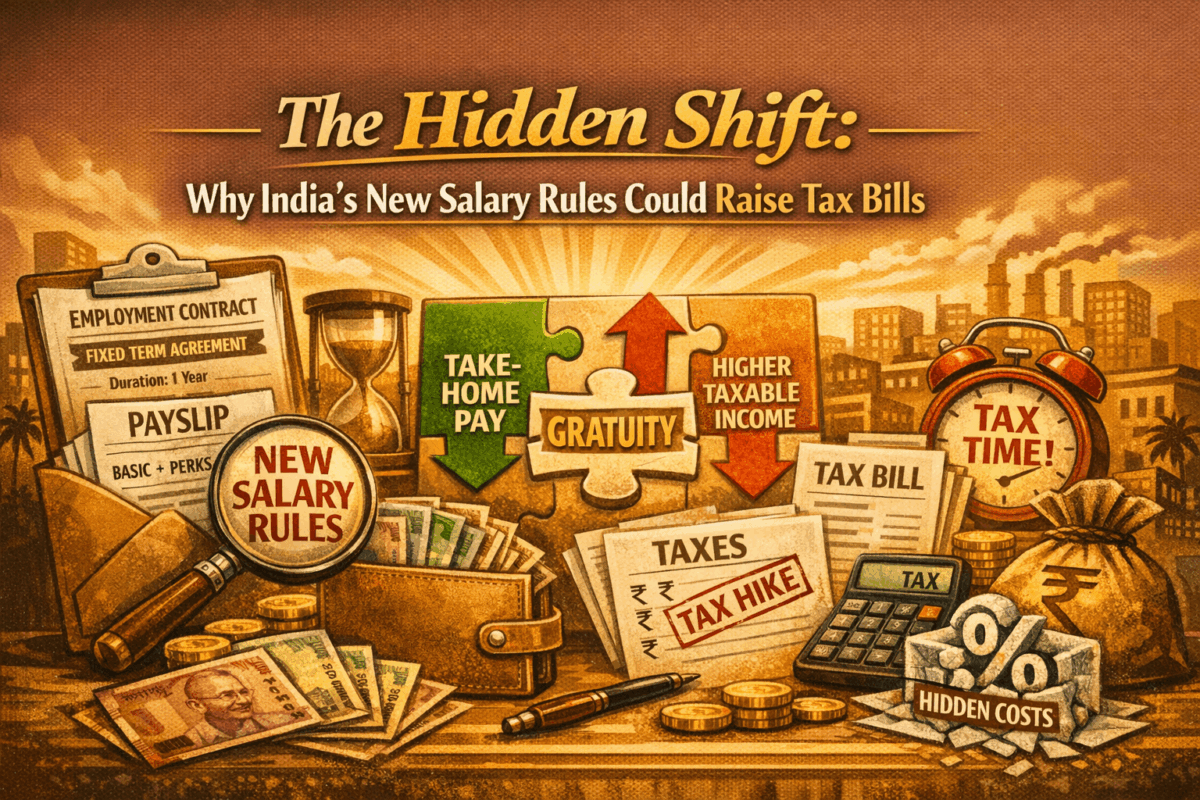
As India prepares to implement new labour codes, salaried professionals are bracing for changes in how their pay is structured. While the reforms are designed to strengthen retirement savings, experts caution that they may also increase annual tax liabilities by shifting more income into taxable categories.
The Basic Pay Reset
Under the Code on Wages, 2019, employers must ensure that Basic Pay accounts for at least 50% of the total Cost to Company (CTC). Currently, many firms keep Basic Pay as low as 20%, filling the remainder with allowances such as House Rent Allowance (HRA) or reimbursements, which often enjoy tax exemptions. The new rule reduces this flexibility, expanding the taxable portion of salaries.
Shrinking Exemptions
With Basic Pay rising to meet the 50% threshold, the scope for tax-free allowances narrows. Since income tax is calculated primarily on Basic Pay and other non-exempt components, employees may see a higher taxable base. Analysts note that allowances previously shielded from taxation could now be absorbed into taxable salary.
The Provident Fund Connection
On the positive side, higher Basic Pay also boosts contributions to the Provident Fund (PF) and gratuity. This builds long-term wealth but locks away more money each month, leaving employees with less liquidity to manage higher tax bills.
Dual Impact on High Earners
For professionals in higher tax brackets, the effect is more pronounced. If overall CTC remains unchanged but taxable salary rises, net take-home pay after tax and PF deductions is likely to decrease. Experts describe this as a “dual impact”—reduced monthly liquidity alongside increased long-term savings.
Compliance Lens
Legal and professional advisors highlight several challenges:
- Optimizing Tax Planning: Employees may need to revisit investment strategies, as traditional deductions may not offset the higher taxable base effectively.
- Corporate Compensation Overhaul: HR departments face the task of redesigning salary structures that remain attractive while complying with the 50% Basic Pay mandate.
- Clarity on Special Allowances: Clearer administrative guidelines are needed to determine which perks or reimbursements remain outside the wage definition.
Legal Context
- Code on Wages, 2019 – Section 2(y): Defines “wages” and underpins the 50% rule.
- Income Tax Act, 1961: Governs exemptions and deductions; changes in wage composition directly affect taxable income.
- Payment of Gratuity Act, 1972 (read with Codes): Higher Basic Pay increases gratuity entitlements, reinforcing long-term benefits.
Outlook
The restructuring of salary components under the new labour codes represents a significant shift in India’s wage architecture. While the reforms strengthen retirement savings, they also expand taxable income, requiring both employees and employers to adapt. Financial planners advise professionals to reassess tax strategies and employers to communicate changes clearly to maintain confidence during the transition.
Disclaimer: This content is provided for informational purposes only and does not constitute legal, financial, or professional advice. Tax laws and labour regulations are subject to interpretation and frequent updates. Readers should consult with a qualified Chartered Accountant or legal expert regarding their specific salary structure and tax liability.