 Total Visitors
  Online Users
  Today
Today  Yesterday

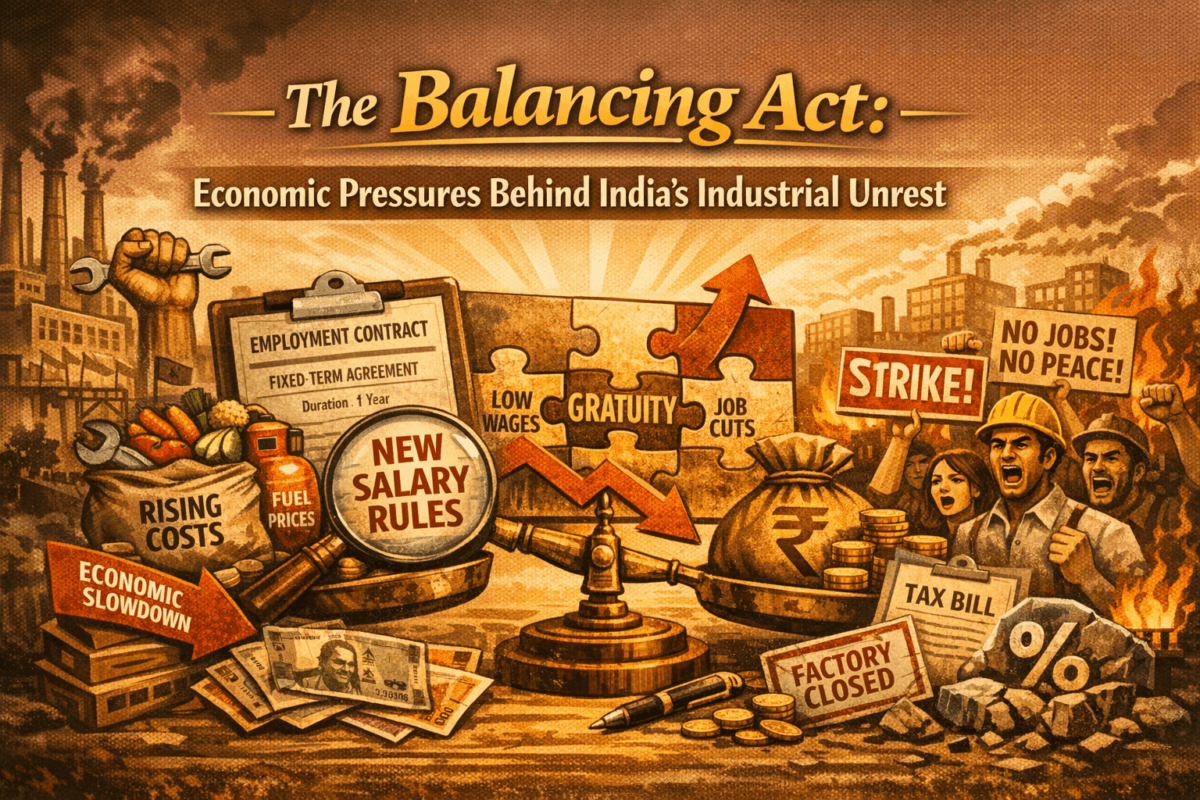
Rising costs of essential household items, including LPG cylinders and food staples, are straining the budgets of industrial workers across India’s manufacturing hubs. With wages often unchanged, many employees say their wages no longer cover basic needs, prompting calls for revisions that reflect the current cost of living.
The Grocery Store Reality
For workers in regions such as Noida and Gurugram, the purchasing power of salaries has declined. Even when nominal wages remain steady, inflation erodes their value, leaving families with fewer resources for food, fuel, and other essentials. Economists describe this as a “cost-of-living squeeze,” where fixed incomes fail to keep pace with rising prices.
The Role of LPG and Fuel
Cooking gas and transportation costs, both unavoidable household expenses have risen sharply. Analysts note that increases in these categories directly reduce disposable income available for healthcare, education, and emergencies, intensifying financial stress on working families.
A Patchwork of Pay
India’s minimum wages vary significantly across states, creating disparities between workers performing similar jobs in neighbouring cities. This unevenness has contributed to perceptions of imbalance and has fueled demands for a more unified wage framework, consistent with provisions under the Code on Wages, 2019, which empowers the central government to set a national floor wage.
Navigating New Labour Codes
The transition to four new labour codes covering wages, industrial relations, social security, and occupational safety has introduced uncertainty. While the reforms aim to modernize employment practices, workers remain anxious about how overtime, benefits, and take-home pay will be calculated once the codes are fully implemented.
Compliance Lens
Legal and professional experts highlight several areas for improvement:
- Wage Indexing Accuracy: Dearness Allowance, linked to inflation, could be recalibrated to better reflect real costs such as LPG and housing.
- Communication Gaps: Employers need clearer frameworks to explain the long-term benefits of the new labour codes, reducing anxiety and potential unrest.
- Regularity of Revisions: Establishing predictable schedules for base wage reviews would provide stability and reduce reliance on reactive measures.
Legal Context
- Code on Wages, 2019 – Section 8: Requires periodic revision of minimum wages, not exceeding five years.
- Industrial Relations Code, 2020 – Section 4: Mandates clear communication of employment terms, including wages and benefits.
- Directive Principles (Article 43): Calls for securing a living wage and decent working conditions for all workers.
Outlook
The current unrest reflects the intersection of rising living costs and wage stagnation. Experts suggest that timely wage revisions, accurate inflation indexing, and transparent communication of labour reforms could help balance worker needs with industrial stability, ensuring that India’s workforce remains resilient in the face of economic pressures.
Disclaimer: This content is provided for informational purposes only and does not constitute legal, financial, or professional advice. Labour laws and economic policies are subject to interpretation and frequent updates. Readers should consult with official government sources or qualified legal consultants regarding statutory compliance.