 Total Visitors
  Online Users
  Today
Today  Yesterday

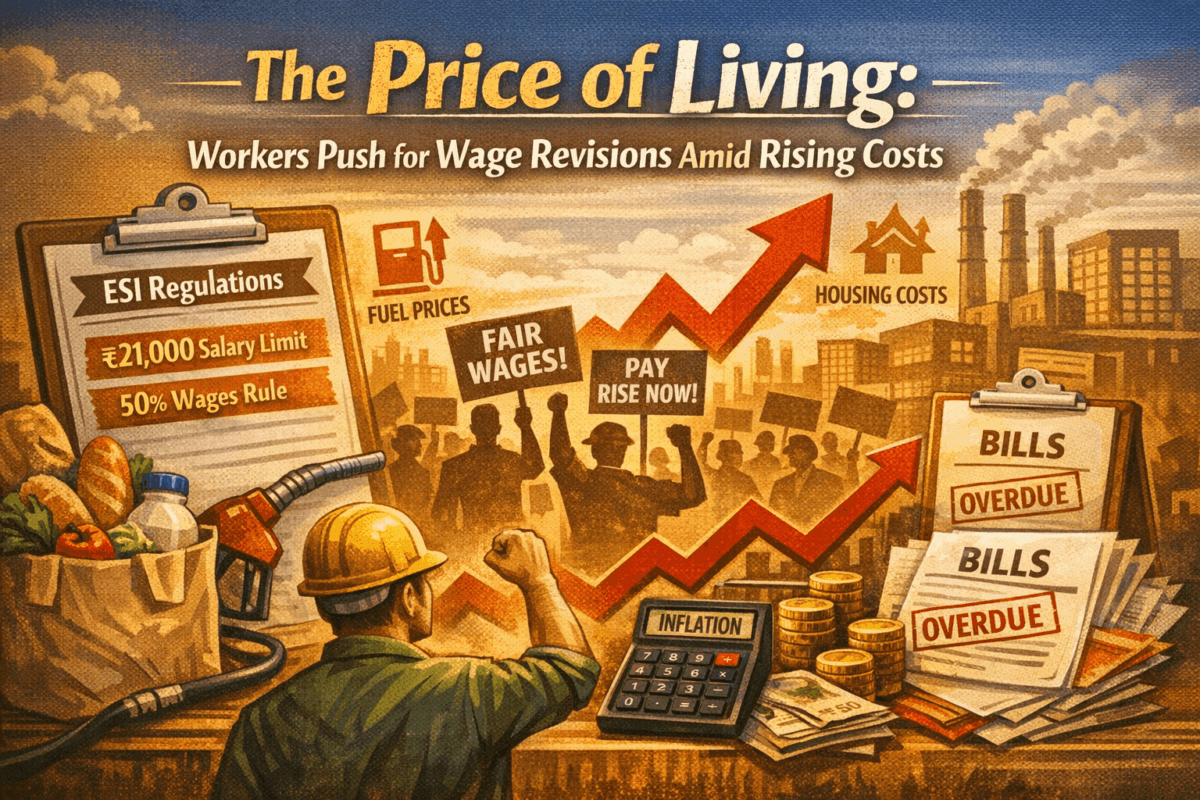
New Delhi, April 16: Industrial workers across India are staging peaceful demonstrations, citing stagnant wages that no longer keep pace with the rising cost of essentials. From Noida to Gurugram, the protests reflect growing concerns over purchasing power and highlight gaps in wage revision cycles under existing labour laws.
Wage Revision Cycles Under Review
Legal experts point to the Code on Wages, 2019, which requires minimum wages to be revised at least once every five years. In several sectors, however, base wage rates have remained unchanged since 2014. Analysts note that this delay has left many families struggling to meet basic needs, even as employers face potential penalties for non-compliance.
Variable Dearness Allowance: Adjustments Fall Short
Workers currently receive increments through the Variable Dearness Allowance (VDA), a statutory entitlement linked to the Consumer Price Index. While these adjustments provide some relief, they have not kept pace with steep increases in rent and food prices. Labour specialists emphasize that the constitutional principle of a “living wage” under Article 43 requires wages to reflect real household expenses.
Cost of Living and Worker Realities
Urban rents and daily essentials now consume a larger share of worker income. Courts have previously underscored the need for wages to align with real-world consumption patterns, and experts argue that updating official “consumption baskets” would better capture the realities faced by migrant workers in industrial hubs.
Collective Bargaining and Regional Parity
Recent wage settlements in Manesar have created a ripple effect, with workers in neighbouring regions seeking similar adjustments. The Industrial Relations Code, 2020 protects the right to collective bargaining, and observers note that comparative settlements often set benchmarks across industries.
Communication Gaps on Labour Codes
Much of the unrest stems from uncertainty over new labour codes. Section 4 of the Industrial Relations Code obliges employers to clearly communicate terms of employment, including overtime and benefits. Experts suggest that clearer communication could reduce confusion and prevent disputes from escalating.
Strengthening Tripartite Dialogue
India’s commitment to ILO Convention 144 requires consultation between government, employers, and unions. Labour analysts believe that strengthening this tripartite dialogue could help resolve grievances before they lead to industrial action.
Outlook
The demonstrations underscore the need for wage policies that reflect current economic realities. Legal experts stress that timely wage revisions, transparent communication, and structured dialogue are essential to maintaining industrial harmony as workers seek fair compensation in the face of rising living costs.
Disclaimer: This article is for informational purposes only and does not constitute legal or professional advice. Labour laws are subject to state-specific amendments and frequent updates. Readers are advised to consult a qualified professional before taking any action based on this content. Key4Comply is not liable for any actions taken or losses incurred by users relying on this information.