 Total Visitors
  Online Users
  Today
Today  Yesterday

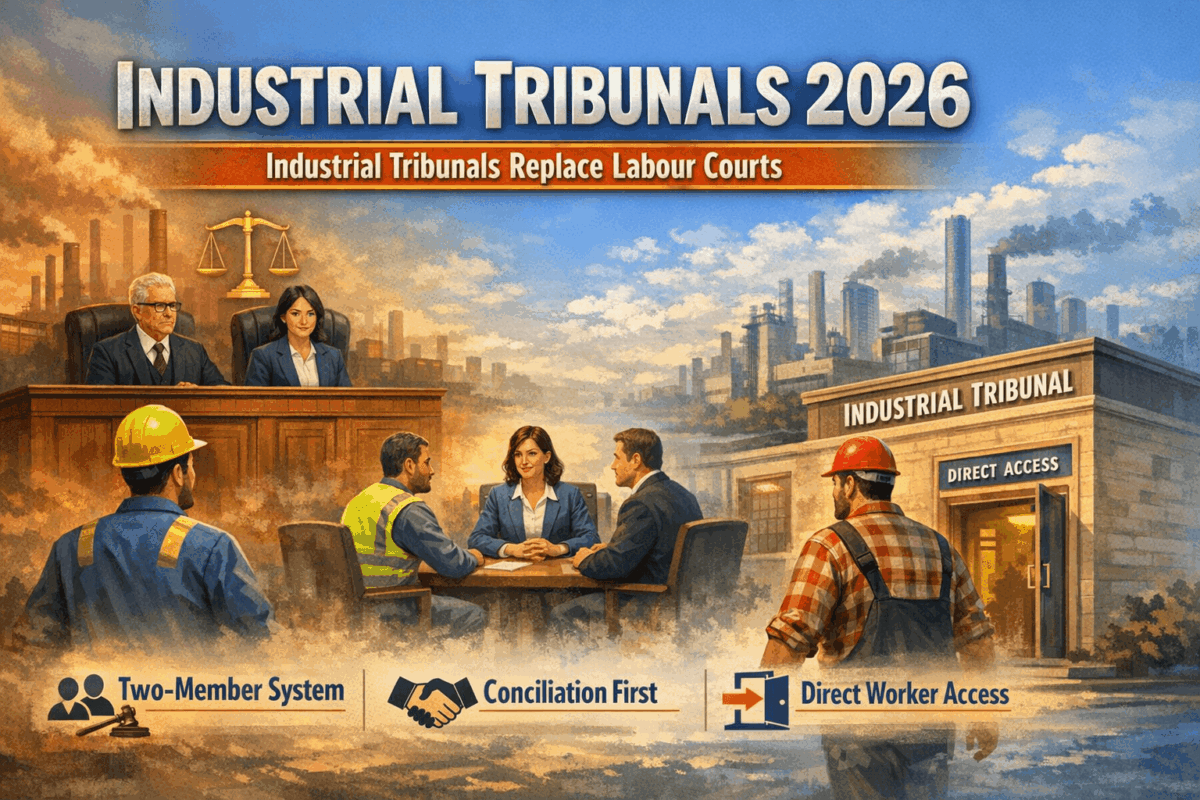
The implementation of the Industrial Relations Code, 2020 marks a significant reform in India’s labour dispute resolution system. Traditional Labour Courts are being replaced with streamlined two-member Industrial Tribunals, a move aimed at expediting justice and modernizing industrial relations.
In a Nutshell
The new framework consolidates dispute resolution into a single tribunal system, emphasizes conciliation, and introduces direct access for workers in certain cases, reshaping how employees and employers interact with the legal system.
The Breakdown
- A Unified Legal Path: For decades, disputes were split between Labour Courts and Industrial Tribunals. The new Code consolidates these into a single Industrial Tribunal structure, reducing confusion and aiming to shorten delays in adjudication.
- The Two-Member System: Each Tribunal will comprise one judicial member and one administrative member. This dual expertise model balances legal interpretation with practical industry knowledge, ensuring judgments are both legally sound and workplace-relevant.
- Encouraging Conciliation: Before reaching the Tribunal, disputes must first go through conciliation led by government-appointed officers. This mandatory step seeks to resolve grievances quickly, reducing the burden on formal adjudication.
- Individual vs. Collective Rights: Workers now have greater direct access. For disputes such as unfair dismissal, individuals can approach the Tribunal directly after a 45-day conciliation period, without waiting for a government “reference,” streamlining access to justice.
Compliance Lens
Legal and professional experts highlight several challenges:
- Administrative Readiness: Timely appointment of qualified administrative members is critical to prevent backlogs during the transition. Transparent, merit-based selection processes will be essential.
- Legal Literacy Gaps: Workers may struggle to navigate the more technical Tribunal structure. Accessible legal aid and digital guidance tools can help bridge this gap.
- Conciliation Efficiency: The effectiveness of the system depends on well-trained Conciliation Officers. Strengthening their capacity is vital to prevent unresolved disputes from overwhelming the Tribunals.
Legal Context
- Industrial Relations Code, 2020 – Chapter IX: Establishes Industrial Tribunals and conciliation mechanisms.
- Abolition of Labour Courts: Labour Courts are subsumed into the Tribunal system, consolidating dispute resolution forums.
- Worker Access Provisions: Direct filing rights for certain disputes after conciliation reflect a shift toward faster individual remedies.
Outlook
The transition from Labour Courts to Industrial Tribunals represents one of the most significant changes in India’s labour justice system. Observers note that while the reform promises speed and clarity, its success will depend on administrative readiness, worker awareness, and the strength of conciliation processes.
Disclaimer: This content is provided for informational purposes only and does not constitute legal, financial, or professional advice. The transition from Labour Courts to Industrial Tribunals is subject to state-specific rules and ongoing judicial review. Readers should consult official government notifications or qualified legal experts regarding statutory compliance and dispute resolution procedures.