

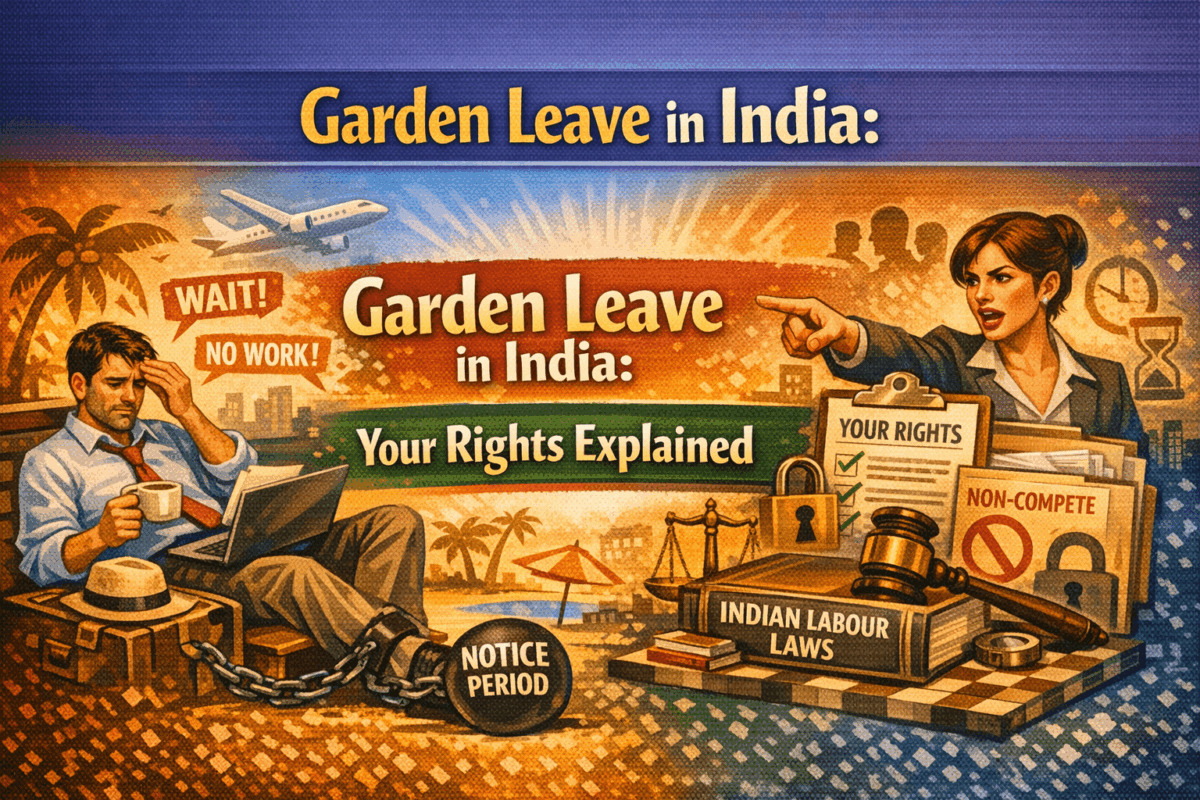
Paid to Stay Home? The Truth About Garden Leave
You’ve resigned, ready for your next chapter. Instead of a smooth handover, your manager says: “You’re on Garden Leave. No office, no emails, and no joining another company until your notice period ends.”
It sounds like a dream — paid time off, but the legal reality is more complex. Let’s break down what Garden Leave means in India.
1. What is Garden Leave?
Garden Leave is when an employer asks a departing employee to stay away from work during their notice period while continuing to receive full salary and benefits.
- You remain a legal employee until the last day of notice.
- You are bound by your contract, including restrictions on joining another employer during this period.
2. Legal Foundation
- Section 27, Indian Contract Act, 1872: Agreements restraining trade are void.
- Court Distinction:
- Post-termination non-competes: Generally unenforceable.
- During employment restrictions: Valid if salary is paid (Niranjan Shankar Golikari v. Century Spinning).
- Key Point: Garden Leave is enforceable only if expressly written into your contract.
3. Labour Codes 2026 Perspective
- Code on Wages: Employers must pay full salary during Garden Leave.
- Industrial Relations Code: All dues must be settled within 2 working days after termination. Garden Leave cannot be used to delay settlement.
4. Can You Refuse Garden Leave?
- If your contract includes a Garden Leave clause, you must comply while being paid.
- Joining another employer during this period may be treated as breach of contract. Employers can seek injunctions or damages, but it is not a criminal offence.
5. When Does Garden Leave Become Unenforceable?
- No salary or benefits paid.
- Excessive duration (e.g., 12 months for mid-level staff).
- No contractual clause authorizing Garden Leave.
6. Manager Myths vs Legal Reality
| What Managers Say | Legal Reality |
| “We can stop your salary during Garden Leave.” | False. Salary must be paid in full; otherwise, it’s unenforceable. |
| “You can’t resign if we put you on Garden Leave.” | False. Resignation is unilateral; Garden Leave only applies during notice. |
| “We can extend Garden Leave indefinitely.” | False. Courts require reasonable duration (usually 1–3 months). |
| “Even without a clause, we can impose Garden Leave.” | False. It must be expressly written into your contract. |
7. Garden Leave vs Non-Compete Clauses
| Aspect | Garden Leave | Non-Compete Clauses |
| Timing | During employment (notice period) | After termination |
| Enforceability | Valid if contractual and salary is paid | Generally unenforceable under Section 27 |
| Employee Status | Still an employee, bound by contract | Former employee, free to work elsewhere |
| Employer Obligation | Must pay full salary and benefits | No obligation once employment ends |
| Court View | Reasonable duration accepted | Struck down as restraint of trade |
8. Employee FAQ: Quick Answers
Q1. Is Garden Leave legal in India?
Yes, if it is in your contract and salary is paid.
Q2. Can I join another company while on Garden Leave?
No. You remain an employee until the notice period ends.
Q3. What if my contract doesn’t mention Garden Leave?
Your employer cannot impose it without your consent.
Q4. Can Garden Leave last for a year?
Courts may strike down excessive durations as punitive.
Q5. What happens after Garden Leave ends?
Your employment terminates, and dues must be settled within 2 working days under the Labour Codes.
Conclusion
Garden Leave is applicable in India, but only under strict conditions: it must be contractual, reasonable in duration, and fully paid. It is India’s lawful workaround for non-compete restrictions, ensuring employers protect their interests while employees receive compensation during transition.
Treat it as a paid transition — and protect your career by knowing the law.
Disclaimer: This article is for educational and informational purposes only and does not constitute legal advice. While the content is based on Indian labour laws and judicial precedents, enforceability can vary based on specific contract wording and court interpretations. Please consult with a qualified legal professional regarding your specific employment situation.