 Total Visitors
  Online Users
  Today
Today  Yesterday

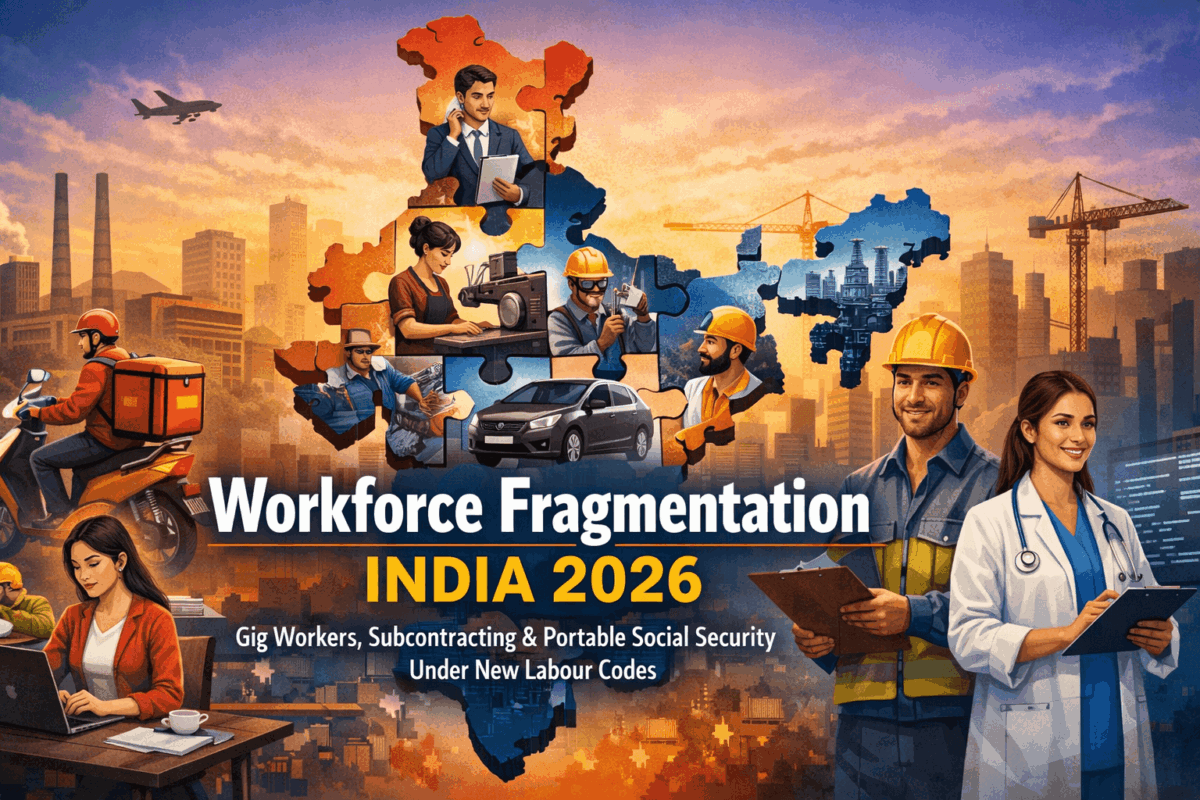
As India implements its new Labour Codes, the rise of diverse work arrangements i.e. from gig platforms to subcontracting; is reshaping the workforce. The central challenge lies in ensuring that social security benefits remain accessible to all workers, regardless of contract type or employment model.
In a Nutshell
Fragmentation in the labour market is testing traditional compliance systems. The new codes aim to bridge gaps by introducing portable benefits, digital governance, and expanded coverage for non-standard workers.
The Breakdown
- The Shift in Work Structure: Modern industry is moving away from the “one roof, one employer” model. Work is increasingly distributed among contractors, freelancers, and digital platforms, creating disparities in legal protections and pay scales.
- The Identification Challenge: Frequent movement between formal and informal roles often leaves workers invisible to regulatory systems. The new codes introduce a Universal Account Number (UAN) that follows the worker, ensuring continuity of retirement and health benefits.
- A Safety Net for Everyone: The Social Security Code, 2020 expands coverage by creating a central fund. Contributions from digital platforms and aggregators will finance insurance and pension benefits for gig and temporary workers.
- Modernizing Industrial Harmony: To reduce unrest, the framework encourages transparent dialogue and digital record-keeping. Even subcontracted staff will have formal mechanisms to raise grievances.
Compliance Lens
Legal and professional experts highlight several challenges:
- Supply Chain Oversight: Multi-layered contracting creates transparency gaps. Digital vendor-management tools can help ensure statutory dues are paid across all tiers.
- Data Portability Hurdles: While UAN improves portability, real-time syncing across state labour portals remains a technical challenge.
- Defining the “Gig” Boundary: Clearer guidelines are needed to distinguish between independent consultants and gig workers, reducing disputes over eligibility under the Social Security Code.
Legal Context
- Code on Social Security, 2020 – Chapter IX: Establishes provisions for gig and platform workers.
- Industrial Relations Code, 2020: Provides frameworks for grievance redressal and collective bargaining.
- Occupational Safety, Health and Working Conditions (OSH) Code, 2020: Standardizes safety and welfare provisions across sectors.
- Concurrent List (Constitution of India): Labour being a concurrent subject requires coordination between Centre and States for effective implementation.
Outlook
India’s labour reforms reflect a shift toward inclusivity in a fragmented workforce. Observers note that while policy intent is clear i.e. expanding coverage and modernizing compliance but the success of the transition will depend on harmonizing state rules, strengthening digital infrastructure, and clarifying worker classifications.
Disclaimer: This content is provided for informational purposes only and does not constitute legal, financial, or professional advice. Labour laws and regulatory frameworks are subject to frequent government updates and state-specific variations. Readers should consult with official government sources or qualified legal consultants regarding statutory compliance.