 Total Visitors
  Online Users
  Today
Today  Yesterday

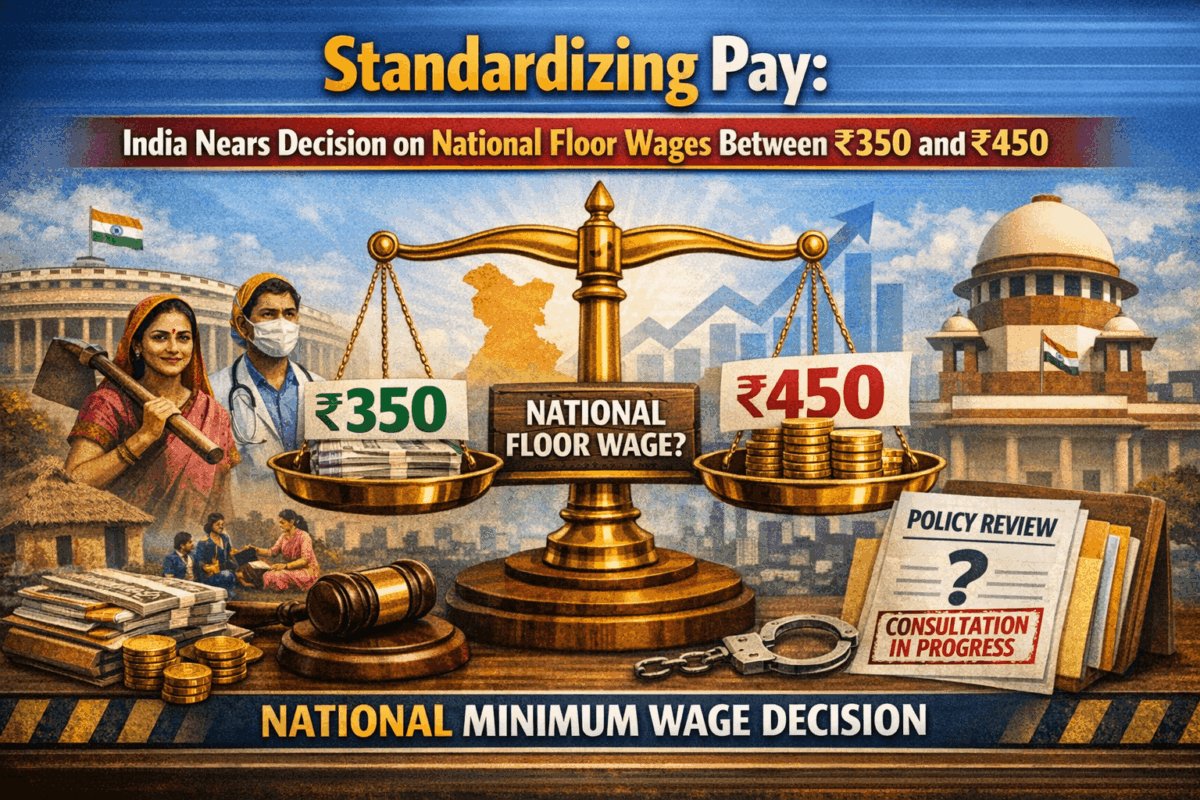
The Central Government is in the final stages of determining a new National Floor Wage, expected to be set between ₹350 and ₹450 per day. The measure, part of the Code on Wages, 2019, is designed to provide a consistent baseline of pay across India, ensuring that no state sets minimum wages below the notified floor.
A Universal Starting Point
Currently, minimum wages vary widely across states, creating disparities for workers performing similar jobs in different regions. The proposed floor wage will act as a legally binding baseline, offering a uniform safety net for India’s diverse workforce while allowing states to set higher rates if they choose.
Closing the Regional Gap
The initiative aims to reduce wage-driven migration and address perceptions of imbalance between neighbouring industrial hubs. By introducing a scientifically calculated floor wage, policymakers intend to ensure that workers everywhere can meet basic living costs, including food, clothing, and housing.
The Power of the New Code
Unlike earlier guidelines, which were advisory, the floor wage under the Code on Wages will carry statutory force. This represents a shift toward predictability for both employers and employees, creating a structured framework for wage-setting across industries.
Balancing the Scales
Experts involved in the process are considering the minimum requirements of a modern family to arrive at the figure. The goal is to set a wage that supports worker dignity while balancing economic growth and business sustainability.
Compliance Lens
Legal and professional observers highlight several challenges:
- Updating State Gazettes: States will need to synchronize their wage notifications with the new central floor to ensure compliance.
- Impact on SMEs: Smaller enterprises may face higher wage costs, prompting discussions on phased implementation or supportive measures.
- Digital Wage Monitoring: Platforms such as the Shram Suvidha Portal are expected to play a key role in ensuring transparency and preventing underpayment, particularly in the unorganized sector.
Legal Context
- Code on Wages, 2019 – Section 6: Empowers the Central Government to fix a national floor wage.
- State Autonomy: States may set higher minimum wages but cannot go below the notified floor.
- ILO Convention 131: Supports fair wage-setting practices, aligning India’s move with international standards.
Outlook
The forthcoming national floor wage marks a significant step toward harmonizing India’s wage structure. Observers note that while challenges remain in balancing regional costs and ensuring compliance, the measure is expected to strengthen worker protections and promote industrial stability across the country.
Disclaimer: This content is provided for informational purposes only and does not constitute legal, financial, or professional advice. Labour laws and government notifications are subject to change. Readers should consult with official government sources, a qualified legal expert, or an authorized consultant regarding specific statutory compliance.