 Total Visitors
  Online Users
  Today
Today  Yesterday

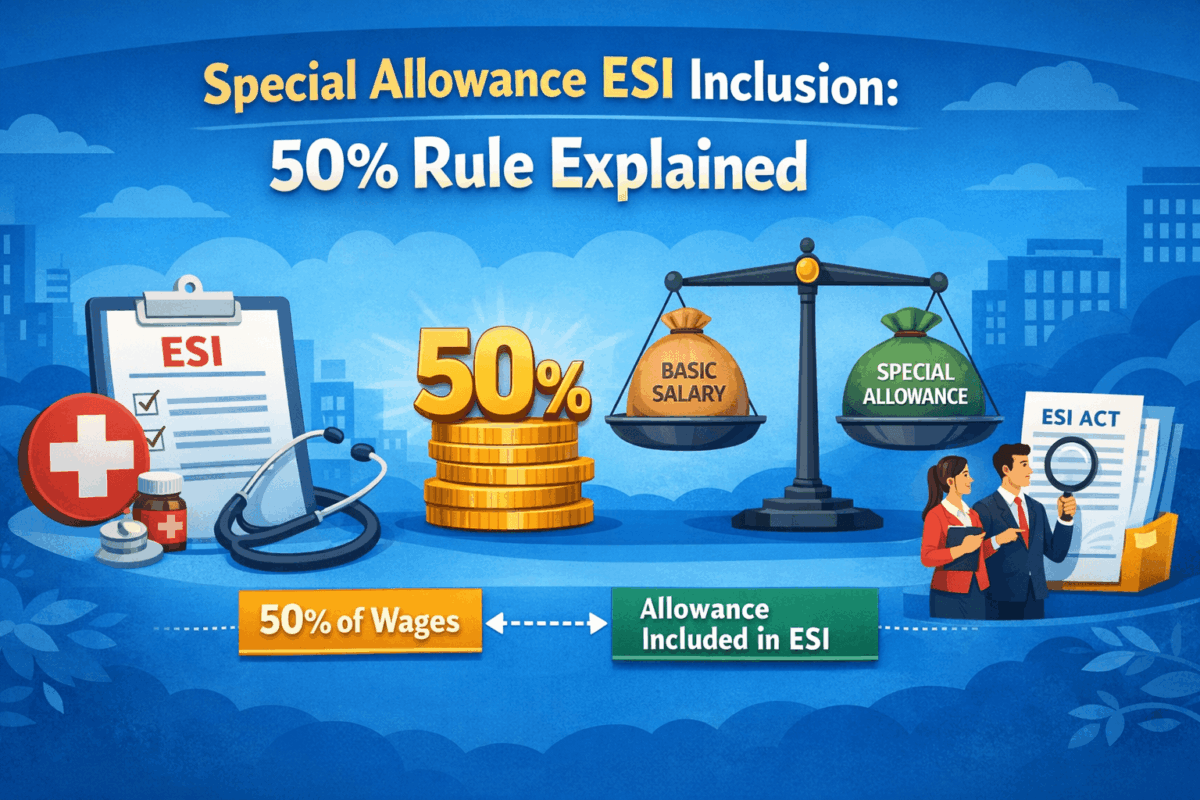
As India transitions to the new labour codes in 2026, the definition of “wages” has become a central compliance issue. For employers, correctly identifying whether “Special Allowance” should be included in Employees’ State Insurance (ESI) calculations is no longer just a payroll matter; it is a statutory requirement that directly impacts worker coverage and organizational liability.
In a Nutshell
The Social Security Code, 2020, effective from late 2025, redefines wages with the “50% rule.” This change ensures that allowances cannot dominate salary structures, and that benefits like ESI and PF are calculated on a fairer, more transparent basis.
The Breakdown
- The “50% Rule” Shift: Under the Code, allowances cannot exceed 50% of total remuneration. If they do, the excess is added back to Basic Pay for calculating statutory benefits such as ESI and PF.
- Special Allowance Inclusion: A common compliance gap has been treating “Special Allowance” as a non-wage component. Judicial precedents and ministry FAQs now clarify those regular cash payments regardless of label generally count as wages for ESI purposes. This means more employees may fall under the ₹21,000 ESI wage ceiling.
- Impact on the ₹21,000 Ceiling: ESI applies to employees earning up to ₹21,000 per month. With “Special Allowance” now included in wage definitions, workers who previously appeared above the limit may qualify for coverage, expanding the social security net.
- The Goal of Consistency: The revised definition aims to prevent wage-splitting practices that reduce benefit entitlements. Contributions—3.25% from employers and 0.75% from employees will now be based on a more accurate reflection of take-home pay.
Compliance Lens
Legal and professional experts highlight several challenges:
- Salary Restructuring: Organizations must audit their CTC structures to ensure Basic + DA meets the 50% floor, or risk automatic recalculation by authorities.
- Principal Employer Liability: Companies using contract labour must ensure contractors do not misuse “Special Allowance” to avoid ESI registration. Principal employers remain liable for compliance.
- Retrospective Risk: Since the new wage definition took effect in November 2025, audits in 2026 will examine salary structures from that date forward, creating potential liability for back-dated contributions.
Legal Context
- Social Security Code, 2020 – Section 2(88): Defines “wages” and introduces the 50% rule.
- Employees’ State Insurance Act, 1948: Governs medical benefits and coverage for employees earning up to ₹21,000.
- Judicial Precedents: Courts have consistently held that regular allowances, regardless of nomenclature, form part of wages for social security purposes.
Outlook
The treatment of “Special Allowance” under the new wage definition reflects India’s broader effort to strengthen transparency in labour compliance. Observers note that salary restructuring, contractor oversight, and retrospective audits will be key areas of focus in 2026 as organizations adapt to the new framework.
Disclaimer: This content is provided for informational purposes only and does not constitute legal, financial, or professional advice. ESI regulations and the Social Security Code are subject to specific judicial interpretations and government notifications. Readers should consult with official government portals or qualified legal experts regarding statutory compliance and payroll audits.