 Total Visitors
  Online Users
  Today
Today  Yesterday

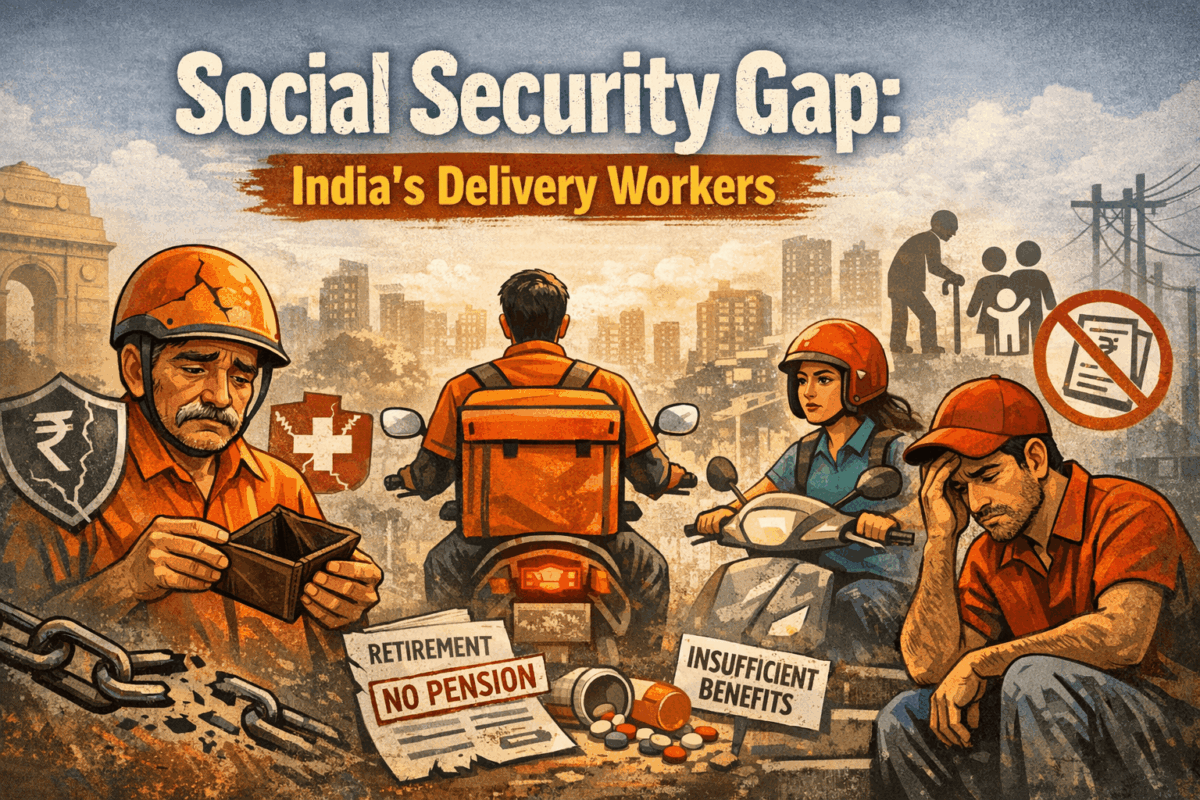
As India’s labour landscape evolves under new codes, attention is turning to a group often overlooked in compliance records i.e. delivery personnel. From LPG cylinder handlers to gig economy workers, these individuals perform essential and hazardous tasks yet frequently remain outside the formal social security net.
In a Nutshell
Delivery workers are critical to daily life, but many are excluded from benefits such as Employees’ State Insurance (ESI) and Provident Fund (PF) due to informal contracting structures. Policymakers and compliance experts are now exploring digital solutions to ensure these “invisible” workers gain access to the protections they deserve.
The Breakdown
- The “Invisible” Workforce: Thousands of LPG delivery staff and gig workers are hired through subcontractors, leaving them absent from official compliance portals. Despite the physical risks of their work, many remain excluded from mandatory benefits.
- The Cost of Exclusion: Without ESI, workers lack access to free medical care for job-related injuries. Without PF, they miss out on long-term savings. Rising costs of essentials such as LPG and food make this absence of a safety net particularly acute.
- The Compliance Paradox: Labour laws are designed to cover all workers, but multi-tier contractor systems create blind spots. Workers may be visible on the streets yet absent from statutory records.
- A Shift Toward Recognition: The 2026 labour framework is increasingly focused on digital payment trails and Aadhaar-linked records to identify and automatically enroll delivery personnel into social security schemes, regardless of contracting layers.
Compliance Lens
Legal and professional experts highlight several challenges:
- Digitizing the Supply Chain: Principal employers, including large oil and gas firms, face the challenge of mandating digital attendance and payroll systems for subcontracted staff.
- Principal Employer Liability: Under the new labour codes, principal employers carry vicarious liability for contractor compliance. Strengthening audits of subcontractors is a critical area for improvement.
- Aadhaar-Based Portability: Ensuring benefits remain with workers even when they change contractors requires expanding the Universal Account Number (UAN) system to cover casual and delivery staff.
Legal Context
- Contract Labour (Regulation and Abolition) Act, 1970 / Labour Codes, 2020: Establish obligations for principal employers and contractors.
- Employees’ State Insurance Act, 1948: Provides medical benefits for eligible workers, often inaccessible to informal delivery staff.
- Employees’ Provident Fund Act, 1952: Governs retirement savings, highlighting the need for inclusion of subcontracted workers.
Outlook
The debate over delivery personnel’s social security reflects India’s broader challenge of extending protections to informal and subcontracted workers. Observers note that digitization, stronger principal employer accountability, and Aadhaar-linked portability will be central to closing the gap and ensuring that essential workers are no longer invisible in compliance systems.
Disclaimer: This content is provided for informational purposes only and does not constitute legal, financial, or professional advice. Labour laws and regulatory enforcement are subject to change and vary by state. Readers should consult with official government sources or qualified legal consultants regarding statutory compliance and worker rights.