

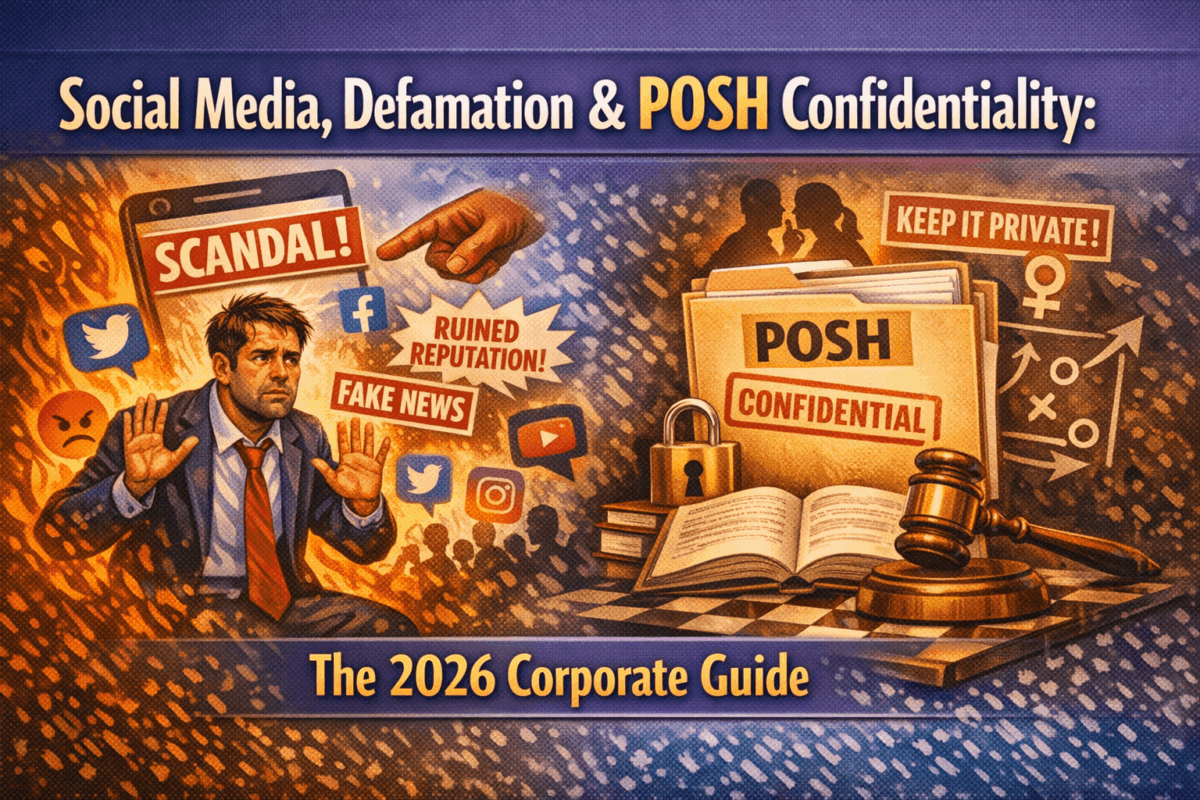
In 2026, social media has become the “court of public opinion.” Employees airing grievances online, especially those involving sexual harassment, create a delicate legal balance. Companies must protect their reputation without crossing into retaliation. This article explores how the POSH Act, the Bharatiya Nyaya Sanhita (BNS), and updated employment contracts intersect in this digital era.
1. Section 16 POSH Act: Confidentiality in the Digital Age
Section 16 of the POSH Act prohibits disclosure of:
- The identity/address of complainant or respondent
- Inquiry proceedings
- Internal Committee (IC) recommendations
Corporate Response: Courts may grant injunctions or takedown orders if posts risk prejudicing an inquiry. Relief is discretionary, not automatic, and judges balance confidentiality with free speech rights.
2. Criminal Defamation Under BNS
Since 2024, IPC Section 499 has been replaced by Section 356 of the Bharatiya Nyaya Sanhita. False and malicious statements against directors or partners may attract criminal defamation charges.
- Penalty: Up to 2 years’ imprisonment, fine, or community service
- Defence: Truthful imputations made in good faith for public interest are protected
3. Directors & Partners: Personal Remedies
When posts target individuals by name, directors can sue in their personal capacity. Civil suits for libel may succeed if reputational harm is proven.
- Damages: Courts have begun awarding compensatory damages, but amounts vary and depend on evidence of financial loss (e.g., client attrition, share price impact).
4. Section 14 POSH Act: Malicious Complaints
If the IC concludes a complaint was malicious or supported by forged documents, Section 14 allows disciplinary action.
Important Caveat: Action requires a written finding by the IC, and employees must be given a chance to respond. Termination solely for social media posts during an active POSH case risks being labelled retaliation.
5. Employment Contracts: The 2026 Shield
Traditional confidentiality clauses often fail to address digital grievances. Updated contracts now emphasize:
- POSH Section 16 compliance
- Non‑disparagement clauses (limited to false or malicious statements)
- Social media conduct rules
Sample Clause [X]: Confidentiality, Non‑Disparagement, and Social Media Conduct
- Employees must not disclose POSH complaint details, identities, or IC proceedings.
- Employees shall not make false or malicious statements that defame or disparage the Company or its Directors. Legitimate grievances raised internally remain protected.
- Employees must not use personal accounts to present internal disputes as public grievances. Malicious posts may be treated as gross misconduct.
- Breaches may lead to injunctive relief, proportionate damages, and defamation proceedings under Section 356 of the BNS.
6. Rolling Out Without Losing Trust
- Frame clauses as “Digital Safety” measures protecting all employees from online harassment and leaks
- Provide internal grievance channels to ensure fairness
- Communicate transparently during onboarding, training, and exit interviews
7. Management Checklist [FREE]
- Review and update social media policies
- Preserve evidence (screenshots, metadata) before deletion
- Issue cease & desist notices where appropriate
- Report confidentiality breaches to the IC
- Update appointment letters and employee handbooks with 2026 clauses
- Include Section 16 confidentiality in POSH training.
In the era of LinkedIn rants and viral Instagram posts, companies must walk a fine line: protect their reputation while respecting employee rights. The key lies in updated contracts, proactive HR policies, and strict adherence to POSH confidentiality. Courts in 2026 demand proportionality, transparency, and fairness making balanced corporate governance more critical than ever.
Disclaimer:
This article is for educational purposes only. Defamation and POSH cases are fact‑specific. Consult a qualified legal professional before initiating action or implementing contractual changes.