 Total Visitors
  Online Users
  Today
Today  Yesterday

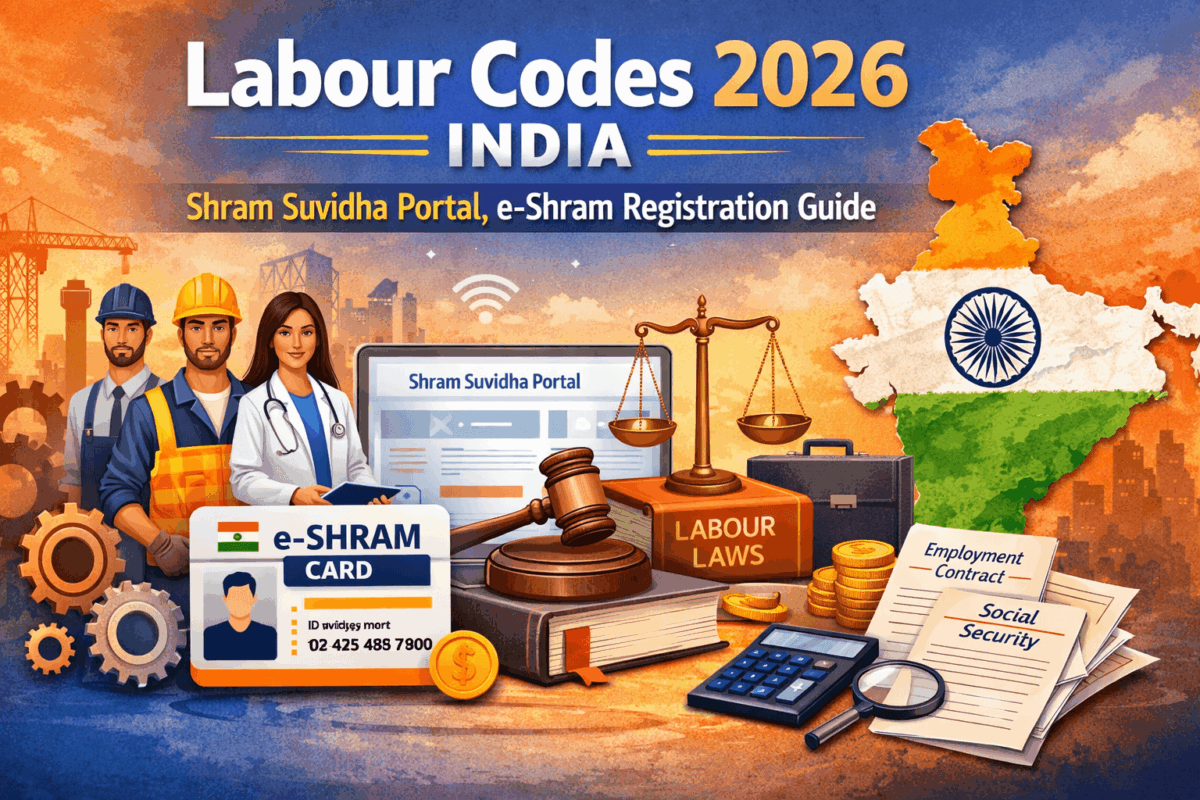
Imagine this: You are a factory supervisor in Pune, managing a team of fifty dedicated shop-floor workers. You’ve just read about India’s shift toward a Single Online Compliance Portal framework under the New Labour Codes. It sounds fantastic on paper that no more dusty ledgers, no more running to regional offices.
But then, reality hits.
Half of your workforce doesn’t own a smartphone. The other half struggles with basic digital literacy. A critical question arises: Does this shiny new digital system inadvertently disenfranchise the very workers it is designed to protect?
It’s a valid, deeply empathetic concern. Let’s break down how the New Labour Codes’ digital accessibility framework actually operates, where it stands today, and the hidden safety nets along with the very real legal and implementation challenges that remain.
Implementation Status: Central Rules Notified, States Lag Behind
As of May 2026, the central government has finally notified the complete final rules for all four Labour Codes in the Gazette of India (May 8–9, 2026). However, labour is a Concurrent List subject. States must notify their own rules for enforcement. Only Gujarat has notified final rules under all four codes. Major states like Maharashtra, Karnataka, Tamil Nadu, and Delhi are at various stages; some have published drafts, others have not.
Critical Disclosure: If you are an employer or worker, your legal obligations and protections depend on the specific state where you operate. This blog provides general information, not legal advice. Always verify state-level notifications.
The Legacy Blueprint vs. The Digital Leap
Under the older fragmented laws viz. Factories Act, 1948; Minimum Wages Act, 1948 compliance was a paper monster. Workers relied on physical slips, manual filings, and visits to labour commissioner offices.
The 4 New Labour Codes (Code on Wages, Industrial Relations Code, Code on Social Security, OSHWC Code) redesign this architecture via centralised portals like Shram Suvidha and e-Shram. The goal: transparency, direct benefit transfers, and reduced bureaucracy.
But how does an offline worker navigate an online world?
The Safety Nets: How the Law Attempts to Bridge the Digital Divide
The designers did not ignore India’s digital divide. The system is “digital-first, but physically supported”; though trade unions argue these supports are still inadequate.
1. Common Service Centres (CSCs)
Over 4 lakh CSCs allow workers to walk in with Aadhaar and a mobile number. A trained operator handles the portal. The worker receives a physical printout or smart card.
2. The Evolution of the “Inspector‑cum‑Facilitator
Under legacy laws, a labour inspector’s job was primarily punitive i.e. focused on surprise visits, checking physical logs, and issuing penalties. The New Labour Codes introduce a core cultural shift by rebranding this role as an Inspector‑cum‑Facilitator.
Legal basis: Section 51 of the Code on Wages, 2019 empowers the government to appoint Inspector‑cum‑Facilitators without geographical restrictions, and Section 38 of the OSH Code, 2020 endows them with special powers including issuing prohibitory orders in case of imminent danger to workers. The Social Security Code, 2020 similarly provides for their appointment under Section 122.
The Accessibility Angle: This is not a semantic upgrade. A core duty of this modified authority is to guide employers and workers particularly those lacking technological infrastructure on how to understand, comply, and access portal‑driven benefits. They act as a human advisory bridge between the digital dashboard and the ground‑level worker.
3. Multi-lingual Help Desks
Helpline 14434 /18008896811 (e-Shram) (9.00 AM to 6.00 PM – Daily including Sundays) in Hindi, English, Tamil, Bengali, Kannada, Malayalam, Marathi, Odia, Telugu and Assamese languages and physical facilitation desks at EPFO/ESIC offices support voice calls and walk-ins.
Step-by-Step Registration Guides (Accurate as of May 2026)
For Unorganised Workers (e-Shram)
- Portal: eshram.gov.in
- Mobile App: eShram (Google Play Store)
- Steps: Aadhaar + mobile OTP → fill personal, occupation, bank details → generate 12-digit UAN card.
For Formal Sector (EPFO/ESIC)
- EPFO: unifiedportal-mem.epfindia.gov.in
- ESIC: esic.gov.in
- Steps: Obtain UAN from payslip → “Activate UAN” → Aadhaar verification → login.
Proactive Tip for Employers: Set up physical digital kiosks on factory floors with a designated HR person to assist workers.
Legal and Implementation Challenges You Must Know
The blog you often see elsewhere paints a rosy picture. Here’s what they leave out:
1. State-wise inconsistency – Only Gujarat has final rules. In Delhi, none are notified. This creates legal uncertainty.
2. Worker protests and trade union opposition
- On May 14, 2026, AICCTU members burned copies of Labour Code notifications, demanding withdrawal.
- CITU has called for “militant protest” alleging the Codes “snatch away fundamental rights” – including working hours, minimum wages, social security, and the right to unionise.
3. Restrictions on strikes
The Industrial Relations Code makes legal strikes virtually impossible through mandatory conciliation. “Fixed-term employment” reduces job security.
4. Constitutional challenges
Restrictions on union registration and the right to strike may violate Article 19(1)(c) (freedom of association). Petitions are expected.
5. Digital divide still real
Trade unions have flagged that offline registration arrangements are insufficient. Biometric mismatches (worn fingerprints of manual labourers) remain a problem, though EPFO now allows face authentication via UMANG app but the rollout is uneven.
The Final Verdict: Empowerment or Disenfranchisement?
The architectural framework aims to construct an unalterable, traceable record of workers’ rights. But the ultimate success depends on:
- Full state-level notification
- Functional offline access at CSCs
- Cooperative Inspector-cum-Facilitators
- Resolution of constitutional and trade union concerns
For now, the system is a work in progress and not a finished solution.
Disclaimer: This blog is for informational purposes only and does not constitute legal advice. The New Labour Codes are in varying stages of implementation across different states, and final central rules were only notified in May 2026. Legal compliance must be assessed based on the specific facts of each case and applicable state rules. Readers are strongly advised to consult qualified legal counsel before taking any action based on this content. Neither the publisher nor the author assumes any liability for actions taken in reliance on the information provided herein.