

The Corporate “Nudge”
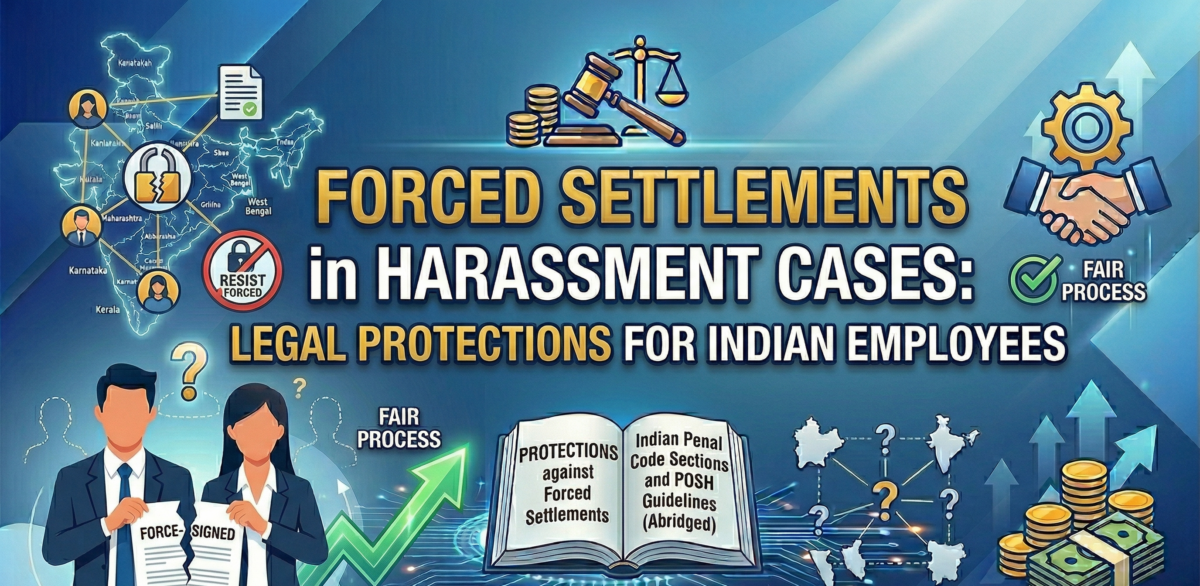
You [the complainant] have reported harassment, expecting a fair inquiry. Instead, HR or a senior executive suggests: “Let’s settle this quietly. It’ll be better for your career.” This is where the second wave of trauma often begins. The critical question: Can a company legally force you into a compromise with your harasser? The law is clear — settlements must be voluntary, never forced.
1. The Legal Core: Conciliation vs. Force
Under Section 10 of the POSH Act, 2013, the process of conciliation is explicitly voluntary. While the Act does not use the word “voluntary” directly in the text of Section 10, it mandates that conciliation can only be initiated at the request of the aggrieved woman before an inquiry begins. This means the Internal Committee (IC) or Local Committee cannot impose or force conciliation upon the complainant.
Rules of Engagement
- Request Must Come from You: The Internal Committee (IC) can only initiate conciliation if you, the complainant, request it in writing. The company or IC cannot suggest it first.
- No Monetary Settlement: Section 10 explicitly forbids settlements based on financial payouts. You cannot “sell” your right to an inquiry.
- Right to Withdraw: Even if you initially agree, you can withdraw before signing and demand a full inquiry.
Voluntary Nature of Conciliation
Conciliation under Section 10 is a voluntary process initiated solely at the request of the aggrieved woman. The law prohibits any coercion or pressure to settle, ensuring that the complainant’s consent is genuine and free from undue influence. Monetary settlements are strictly forbidden, and the complainant retains the right to withdraw from conciliation at any point before signing an agreement.
The 2026 Shift: Beyond POSH
- Industrial Relations Code, 2020 and OSH Code, 2020 emphasise a dignified workplace for all genders.
- For non-sexual harassment (bullying, caste discrimination, etc.), mediation may be used but serious misconduct cannot be bypassed through “quiet settlements.”
OSH Code, 2020 (Sections 111–113) and Its Relevance
- Sections 111–113 of the OSH Code, 2020 primarily deal with penalties related to workplace safety and health violations.
- These sections do not specifically address harassment or forced settlements.
- Therefore, while the OSH Code promotes safe and healthy working conditions, Sections 111–113 are not directly related to the topic of forced settlements or harassment cases under the POSH Act.
- The focus of these sections is on ensuring compliance with occupational safety standards rather than dispute resolution or harassment complaints.
Note: The Industrial Relations Code, 2020 prescribes fines up to ₹10,00,000 for unfair labour practices, which relates to the prohibition of lay-off and conditions precedent to retrenchment of workers, and is not directly related to harassment or forced settlement issues discussed here.
2. When a “Settlement” Becomes Coercion
Forced settlements are unlawful. Coercion occurs when:
- Promotion or appraisal is linked to “closing the chapter.”
- HR suggests formal complaints will make you “unhireable.”
- IC refuses to proceed unless you “try to talk it out.”
Such tactics amount to victimisation, which is itself a violation under the POSH framework.
3. Consequences for the Company
If coercion comes to light:
- Invalidation of Settlement: Courts can strike down forced settlements as “vitiated by undue influence.”
- Penalty on IC: Members may be removed or disqualified for failing to follow neutral procedure.
- Heavy Fines: Under the OSH Code, 2020 (Sections 111–113), penalties for non-compliance with workplace safety and conduct standards can reach ₹2,00,000 for first offences, with imprisonment up to 3 months or higher fines for repeat offences.
4. Helpful Peer Action Plan
If you’re being nudged toward compromise:
- Put It in Writing: Email HR — “I am not seeking conciliation and request a formal inquiry as per law.”
- Check IC Composition: Ensure an external member (lawyer/NGO representative) is present. Without one, the IC is illegally constituted.
- Record the Pressure: Keep notes of who spoke, when, and what was said.
- Know the No-Money Rule: Any offer of money, bonus, or hike to drop the case is illegal under Section 10.
Bottom Line
- Conciliation is voluntary, not mandatory.
- No monetary settlements are allowed.
- Forced settlements amount to coercion and victimisation.
- Companies face heavy fines and IC disqualification if they pressure complainants.
In short: If you face pressure to “settle quietly,” remember — the law is on your side. You can refuse, demand a full inquiry, and hold the company accountable.
Disclaimer:
This content is for educational and informational purposes only and does not constitute legal advice. Every harassment case is unique and governed by specific company policies and judicial interpretations. For actionable legal strategy, please consult with a qualified Advocate or a certified POSH consultant.