

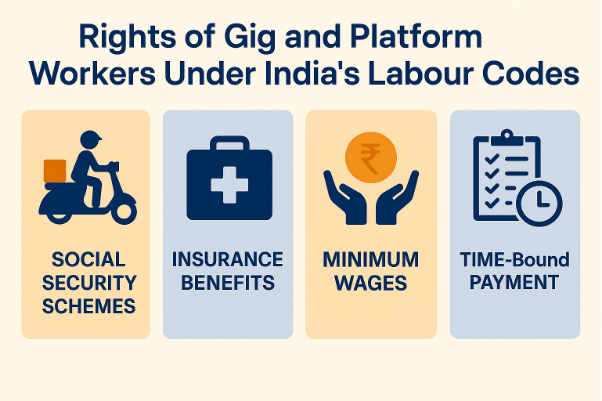
India’s gig and platform workforce—spanning delivery riders, app-based drivers, freelancers, and service providers—has long operated outside the formal labour framework. With the implementation of the new Labour Codes, this segment now receives legal recognition and access to social security benefits for the first time. From health insurance and pensions to grievance redressal and portable IDs, the reforms mark a turning point in how India safeguards its digital-age workforce. This blog outlines the key rights now available to gig and platform workers and what they mean for long-term security and dignity at work.
Legal Recognition and Inclusion
For the first time, gig and platform workers are formally defined under Indian labour law. This recognition is crucial—it lays the foundation for extending protections, benefits, and grievance mechanisms to a workforce that was previously invisible in policy frameworks.
Social Security Coverage
The Social Security Code 2020 introduces a dedicated fund for gig and platform workers. Aggregators—such as ride-hailing, food delivery, and e-commerce platforms—are required to contribute a percentage of their annual turnover to this fund. These contributions will support:
- Health and maternity benefits
- Disability and accident insurance
- Old-age protection and pensions
Workers can register on the national portal and receive a unique ID linked to Aadhaar, ensuring portability of benefits across platforms and states.
Insurance and Safety Nets
Eligible gig workers are entitled to coverage under the Employees’ State Insurance (ESI) scheme, subject to notification by the government. This includes:
- Medical care for workers and their families
- Compensation for workplace injuries
- Maternity benefits for women workers
This marks a significant shift toward formalizing protections in high-risk, low-margin jobs.
Gratuity and Retirement Benefits
While gig workers may not qualify for traditional gratuity linked to tenure, the new framework allows for alternative retirement benefits through government-supported schemes like:
- PM Shram Yogi Maandhan (₹3,000 monthly pension)
- National Pension Scheme for Traders and Self-Employed Persons
These schemes are voluntary but subsidized, offering long-term financial security.
Job Portability and Digital Access
Workers can self-register on the e-Shram portal, which enables:
- Access to welfare schemes across states
- Portability of social security benefits
- Digital tracking of work history and entitlements
This is especially beneficial for migrant workers and those working across multiple platforms.
Grievance Redressal Mechanisms
The codes mandate the creation of structured grievance redressal systems. Workers can raise concerns related to:
- Non-payment or delayed payment
- Unsafe working conditions
- Denial of benefits or misclassification
Helplines and digital complaint portals are being rolled out to ensure timely resolution.
Why This Matters
India’s gig economy is expected to grow to 23.5 million workers by 2030. These reforms are not just policy updates—they are a recognition of the changing nature of work. By extending legal protections and social security to gig and platform workers, the Labour Codes aim to balance flexibility with fairness.
Join the Conversation
Your thoughts matter. Share your perspective in the comments—healthy dialogue helps us all understand labour law better.
Need Guidance?
Feel free to book a consultation. Expert advice can make compliance smoother and more effective.
Spread the Knowledge
If you found this article useful, don’t keep it to yourself—share it with colleagues, friends, or on social media. Together, we can build greater awareness of labour rights and responsibilities.
Disclaimer – This blog post is a general guide. It should not be considered legal advice. Consult a legal professional for more details.