 Total Visitors
 Online Users
 Today
 Yesterday


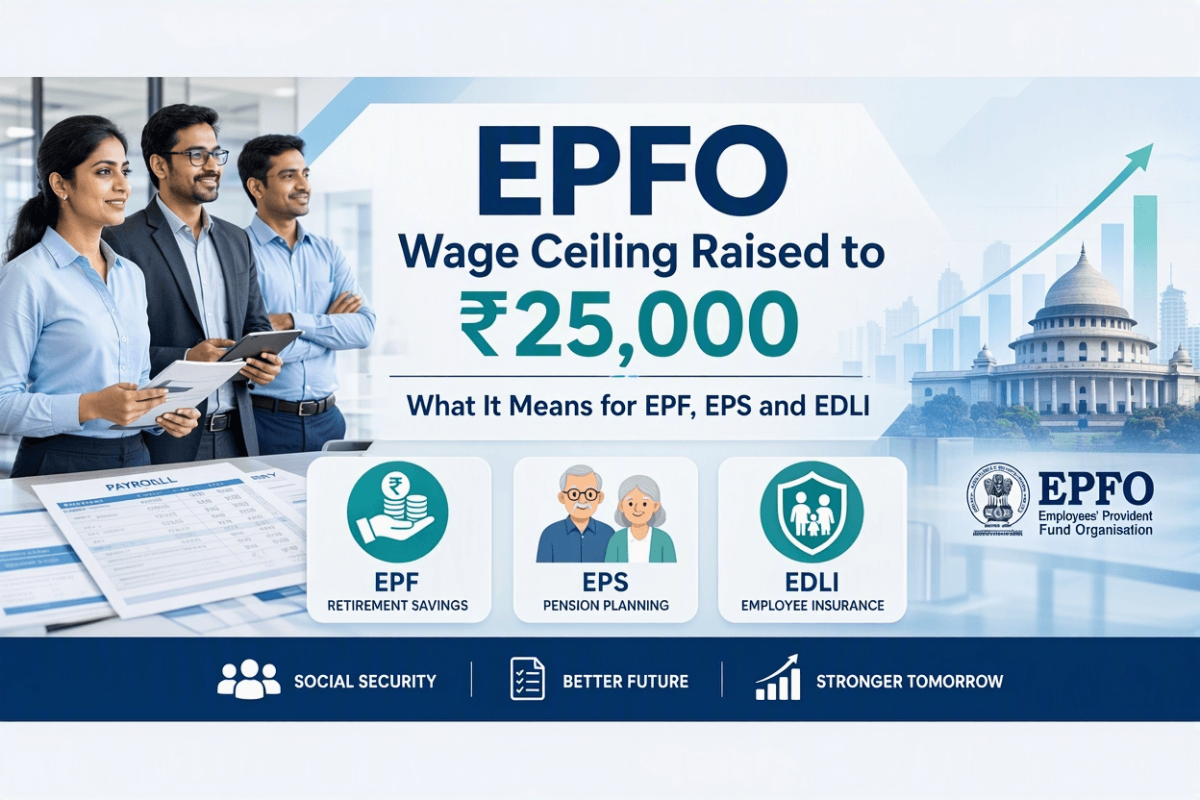
The wage ceiling for mandatory coverage under the Employees’ Provident Fund Organisation has been revised from ₹15,000 to ₹25,000 per month. The change, notified in September 2026, marks the first revision in twelve years and is expected to bring a substantial number of additional employees within the statutory social security framework.
Who Comes Under Mandatory Coverage Now
Employees whose basic wages plus dearness allowance fall between ₹15,000 and ₹25,000 per month, and who were previously outside mandatory EPFO coverage solely because their wages exceeded the old threshold, are now eligible for enrolment. The revision is expected to extend coverage to over fifty lakh additional workers across the country.
It is important to note that employees already enrolled in the fund do not lose their membership due to the ceiling change. Those earning above ₹25,000 may continue to contribute where existing rules and employer arrangements permit.
Impact on EPF Contributions
Under the standard structure, an employee contributes twelve per cent of applicable wages towards the Provident Fund, with the employer making a matching contribution. At the old ceiling of ₹15,000, this meant a monthly contribution of ₹1,800 from each side. With the ceiling now at ₹25,000, the corresponding figure rises to ₹3,000.
For affected employees, this translates to a higher monthly deduction from take-home pay, but a larger amount set aside for retirement savings. The employer’s statutory contribution also increases correspondingly.
Implications for EPS Pension
The employer’s share is divided between the Provident Fund and the Employees’ Pension Scheme, with 8.33 per cent directed towards the pension component. With the ceiling raised, the maximum contribution towards the pension scheme rises from approximately ₹1,250 to around ₹2,080 per month.
However, a higher contribution does not automatically mean every member will receive a proportionately higher pension. The actual pension amount depends on pensionable salary, eligible service, and the applicable formula. For employees whose pensionable salary is calculated on the revised ceiling, the benefit may be higher, subject to the scheme’s conditions.
EDLI Insurance Cover
The Employees’ Deposit Linked Insurance scheme provides a benefit to nominees in the event of a member’s death while in service. The maximum insurance payout was previously ₹7 lakh, calculated on the basis of the ₹15,000 ceiling. With the ceiling at ₹25,000, the estimated maximum benefit rises to approximately ₹10.5 lakh, using the existing formula.
This figure is an estimate based on the current calculation method. The actual benefit will depend on the applicable rules and any future revisions to the scheme’s structure.
What Employers Need to Do
For employers, the revision requires identifying employees who now fall within the mandatory coverage threshold and ensuring that payroll and statutory compliance processes reflect the new ceiling. The revised statutory ceiling does not require employees to submit a separate application; enrolment is the employer’s responsibility where applicable.
The government has indicated that the higher ceiling is intended to align the social security framework with prevailing wage levels and expand formal coverage. Stakeholders should refer to official EPFO notifications for detailed guidance on implementation and compliance.
Disclaimer: This content is for informational purposes only and does not constitute legal, financial, or professional advice. The information is based on publicly available sources and is subject to change. Readers are strongly advised to verify all details, including statutory provisions, contribution rates, eligibility criteria, and calculation methods, directly with official EPFO sources or a qualified professional before taking any action. The author and publisher assume no liability for any loss or damage arising from reliance on this information.