 Total Visitors
  Online Users
  Today
Today  Yesterday

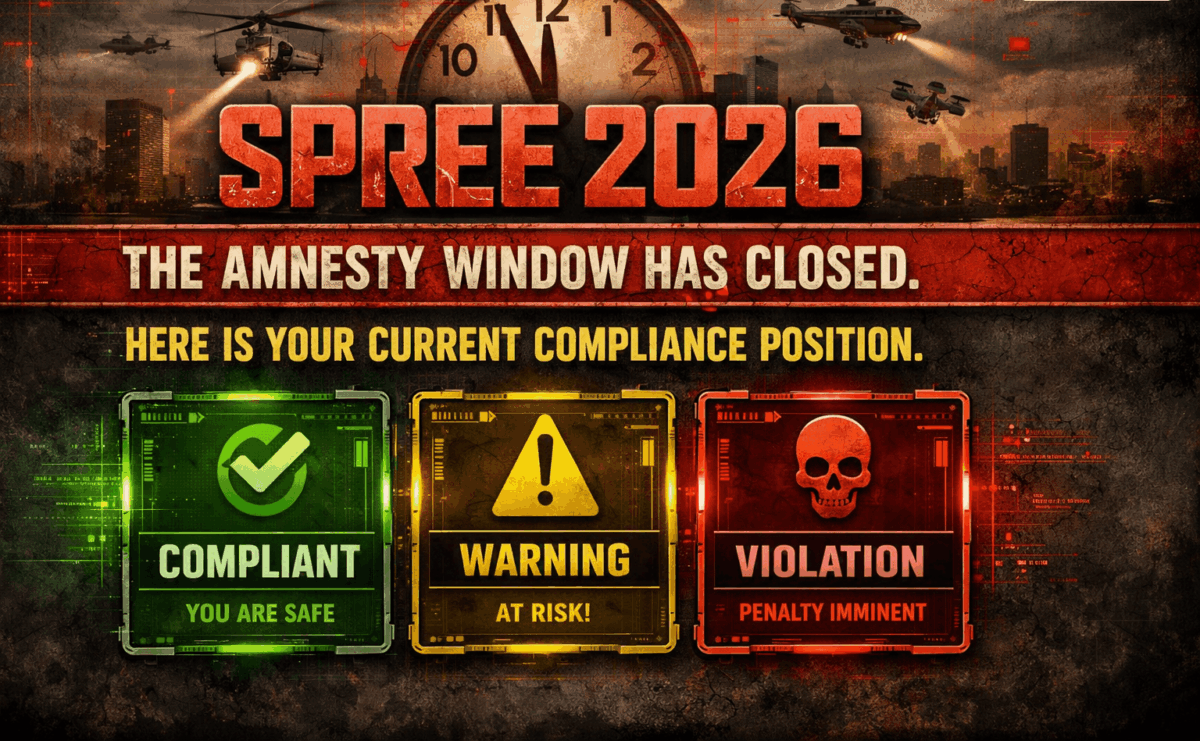
The short answer is no. The SPREE 2026 scheme no longer offers protection from inspection and back-dated demands. The window for the scheme closed on January 31, 2026 . Employers who did not register during this period are now exposed to the full rigor of the law, including retrospective demands for contributions, interest, damages, and legal action .
What Was the SPREE Scheme?
The Scheme for Promotion of Registration of Employers and Employees (SPREE) was a special initiative by the Employees’ State Insurance Corporation (ESIC) to expand social security coverage . It offered a one-time opportunity for unregistered employers to join the ESI framework without the fear of retrospective coverage, punitive action, or inspections .
The scheme was originally operational from July 1, 2025 to December 31, 2025 . In view of requests from employers and state governments, it was extended by one month until January 31, 2026 . During this period, over 1.38 lakh new employers and 1.12 crore new employees were registered under the scheme .
Why the Scheme No Longer Offers Protection
The protection offered by the SPREE scheme was conditional on registration during the scheme period. The official notification was clear: if an employer failed to avail of the benefits of the SPREE Scheme and did not register their establishment under the ESI Scheme, then such establishment would be liable to pay past contributions along with damages and interest, besides legal actions and penalties after January 31, 2026 .
The current legal position is that the SPREE deadline has passed. Here is what it means:
| Aspect | SPREE Window (Jul ’25 – Jan ’26) | Current Position (Post Jan ’26) |
| Registration | Voluntary, without past liability | Mandatory; no amnesty |
| Past Contributions | Waived | Liable for retrospective recovery |
| Inspections | Protection from past inspections | Subject to inspection |
| Penalties | Waived | Liable for damages, interest, and legal action |
The Current Consequences for Non-Compliance
As of today, August 2026, an employer who is not registered under ESIC but meets the threshold criteria (10 or more employees, among other conditions) is in a state of statutory non-compliance. The consequences are operational realities.
- Retrospective Recovery: ESIC authorities are now empowered to assess and demand past contributions. This can extend back to the date the Act first became applicable, not from the date of discovery . The limitation period under the relevant provisions, including Section 125 of the Social Security Code, 2020, allows for recovery proceedings.
- Interest and Damages: Beyond the principal contribution amount, employers are liable to pay interest at 12% per annum on delayed payments . Damages can be levied up to 25% of the arrears or even 100% in serious cases .
- Legal Action and Prosecution: Employers can face prosecution under the ESI Act, with penalties including fines up to ₹10,000 and imprisonment up to 3 years . Where the employer deducts the employee’s share but fails to deposit it, the minimum imprisonment is 1 year with a mandatory fine .
- Loss of Amnesty Benefits: The window for a clean slate has closed. The government’s position is that the SPREE scheme was the single, time-bound opportunity to regularize without liability.
The Amnesty Scheme: A Narrower Path
It is important to distinguish the SPREE scheme from the Amnesty Scheme, 2025. The Amnesty Scheme remains open until September 30, 2026 . However, it serves a different purpose. It is designed to settle pending disputes and litigation, not to provide a fresh registration with no past dues . Under the Amnesty Scheme, penalties are waived, but interest and the principal contribution amount still need to be paid . This is not the same as the “clean slate” offered by SPREE, which waived past dues entirely.
The Bottom Line
The SPREE amnesty window has closed. Employers who are not registered under ESIC are facing a high-risk compliance situation. The protection from inspection and back-dated demands is no longer available. The government has signaled its intent to enforce compliance, and the new Labour Codes have made social security coverage a central pillar of the regulatory framework. Employers must register immediately and prepare for potential recovery proceedings for past periods.
DISCLAIMER: This content is for educational and informational purposes only, based on available Central and State notifications as of August 2026. It is not formal legal counsel. Please consult a qualified lawyer for advice tailored to your establishment’s specific operations.