 Total Visitors
 Online Users
 Today
 Yesterday


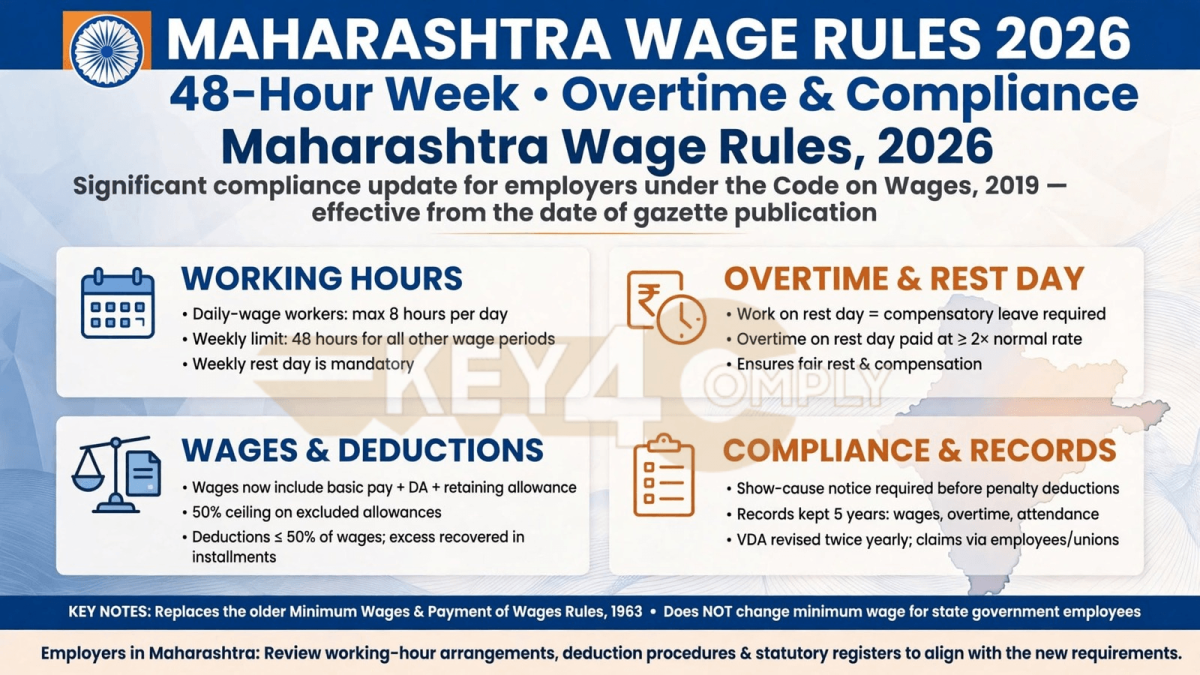
Maharashtra has notified the Maharashtra Wage Rules, 2026, bringing a significant compliance update for employers covered under the Code on Wages, 2019. The new framework, effective from the date of gazette publication, replaces the older Minimum Wages and Payment of Wages Rules of 1963, though it does not alter minimum wage determination for state government employees.
For daily-wage workers, a normal working day is now capped at eight hours. For all other wage periods, total weekly working hours cannot exceed 48. Employers must grant a weekly rest day. If work is taken on that rest day, compensatory leave is mandatory, and overtime for such work must be paid at not less than double the normal rate. The rules also standardise the definition of wages, covering basic pay, dearness allowance and retaining allowance, with a 50% ceiling on excluded allowances. This will affect statutory calculations such as gratuity.
On the administrative side, deductions in any single wage period cannot exceed 50% of wages, and any excess must be recovered in instalments. Before imposing penalty-related deductions, employers must issue a show-cause notice and allow the employee to respond. Record-keeping remains critical. Employee registers, wage and overtime registers, and attendance records must be maintained in physical or electronic form for five years, with wage slips issued on or before payday. Variable dearness allowance will be revised twice a year, and claims relating to wages, rest-day pay, overtime and unlawful deductions can be filed by employees or recognised unions.
Employers operating in Maharashtra should review their working-hour arrangements, deduction procedures and statutory registers to align with the new requirements.
Disclaimer: This post is provided for general informational and awareness purposes only. It does not constitute legal advice, a legal opinion, or a substitute for professional consultation. The summary is based on publicly reported details of the Maharashtra Wage Rules, 2026 and may not reflect every nuance, exemption, or subsequent amendment. Employers and employees should verify the official gazette notification and seek advice from a qualified labour law professional before taking any action based on this content. The author and publisher disclaim any liability for any loss or damage arising from reliance on this information.