 Total Visitors
 Online Users
 Today
 Yesterday


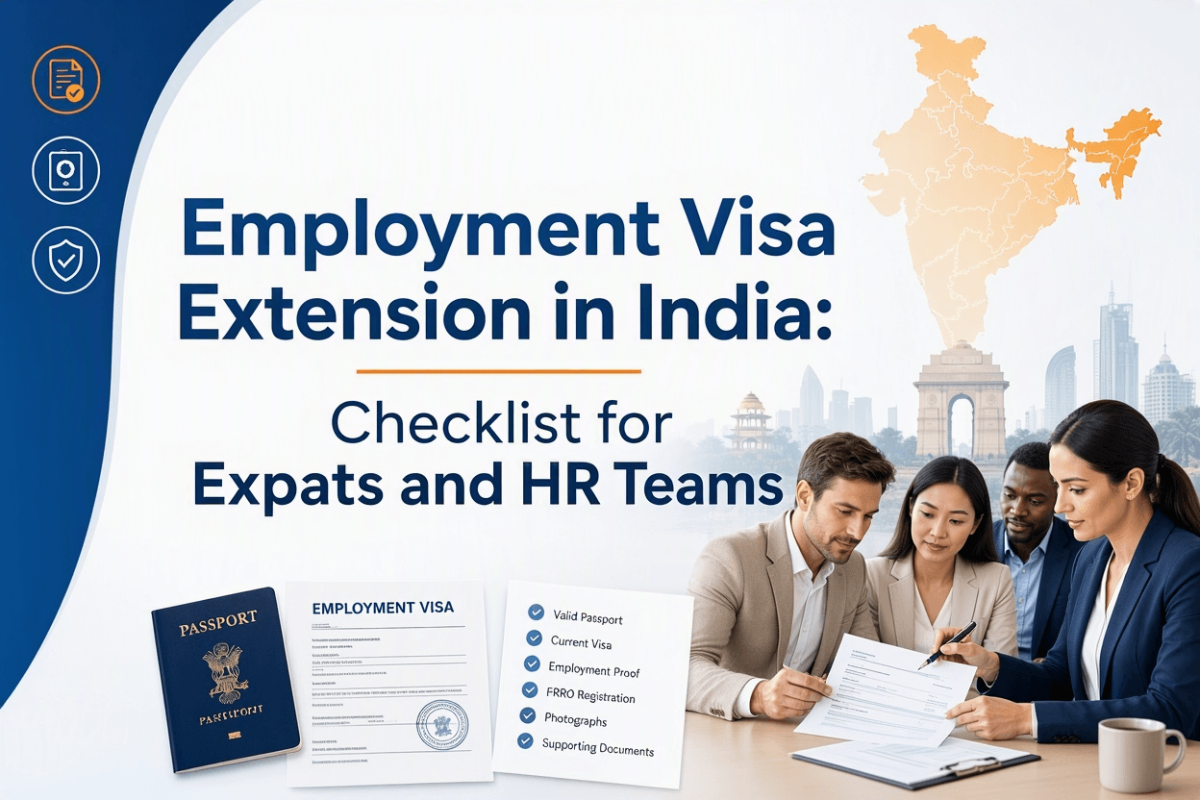
Foreign nationals working in India on an Employment Visa must maintain valid immigration status for their entire tenure. If employment continues beyond the initial visa validity, an extension application must be filed. The process is entirely digital, but strict statutory conditions, particularly regarding salary thresholds and employer changes, require meticulous compliance.
Where to Apply
Extensions are exclusively processed online through the Ministry of Home Affairs’ e-FRRO portal. The physical Foreigners Regional Registration Office (FRRO) or Foreigners Registration Office (FRO) handles backend processing. Applicants are no longer required to submit physical copies or visit the office in person unless officially summoned for an interview or document verification.
When to Apply
An extension application should be submitted at least 60 days before the current visa expires. Waiting until the last 15 days is a severe compliance risk. Employment visas are typically extended for up to one year at a time, allowing a cumulative stay of up to five years from the initial date of issue.
Who Qualifies
An extension is granted only if the foreign national continues to meet the original Employment Visa eligibility criteria. Most critically, the applicant’s gross salary must meet or exceed the mandatory threshold of ₹16.25 lakh per annum (approximately USD 25,000). Limited exemptions apply to specific categories like foreign language teachers (non-English), ethnic cooks, and NGO workers.
The visa is strictly tied to the sponsoring Indian entity. A change of employer is not permitted on an active visa. If an employee changes employers, the existing visa becomes void, and they must exit and apply for a fresh Employment Visa. Material changes in designation or employment terms must be approved by the MHA before implementation.
Documents to Prepare
All documents must be scanned and uploaded as colour PDFs on the e-FRRO portal. The core digital checklist includes:
- Identification: Scanned valid passport (with at least 6 months validity), current visa, arrival stamp, and recent passport-sized photographs.
- Employment Proof: The renewed employment contract (confirming the ₹16.25 lakh+ salary) and an undertaking letter on the company’s letterhead.
- Tax Compliance: PAN card copy and Income Tax Returns (ITR) for the previous year.
- Registration & Residence: Valid FRRO Registration Certificate and proof of residence (e.g., registered lease deed or Form C).
- Corporate Documents: The sponsoring company’s Certificate of Incorporation and GST registration.
Travel During Processing: A Common Trap
International travel while an extension is pending can cause the application to lapse. The applicant must remain in India until the extension is granted. If emergency travel is unavoidable and the visa has expired, the individual must obtain a specific exit permit from the FRRO, and will require a new visa to re-enter India.
Strict Overstay Penalties
An Employment Visa must never be allowed to expire without a pending extension application. Overstaying is a violation of the Foreigners Act, 1946, and attracts strict progressive financial penalties (ranging from ₹500 for minor delays up to ₹50,000 for extended periods, depending on duration and nationality). Beyond fines, overstaying can result in prosecution, deportation, and blacklisting.
Practical Points for Statutory Compliance
- Salary Audits: Ensure the gross salary strictly meets the ₹16.25 lakh threshold before filing the extension.
- Proactive Filing: Initiate the e-FRRO process 60 days prior to expiry to account for potential administrative delays.
- Record Keeping: Ensure expatriates maintain active PAN and ITR filings, as these are statutory prerequisites for renewals beyond the first year.
Disclaimer: This content is for informational purposes only and does not constitute legal, financial, or professional advice. The information is based on the cited article and is subject to change. Immigration rules, documentation requirements, and processing procedures vary by jurisdiction and individual circumstance. Readers are strongly advised to verify all details, including eligibility, documents, timelines, and travel implications, directly with the Bureau of Immigration, the relevant FRRO or FRO, or a qualified immigration professional before taking any action. The author and publisher assume no liability for any loss or damage arising from reliance on this information.