 Total Visitors
 Online Users
 Today
 Yesterday


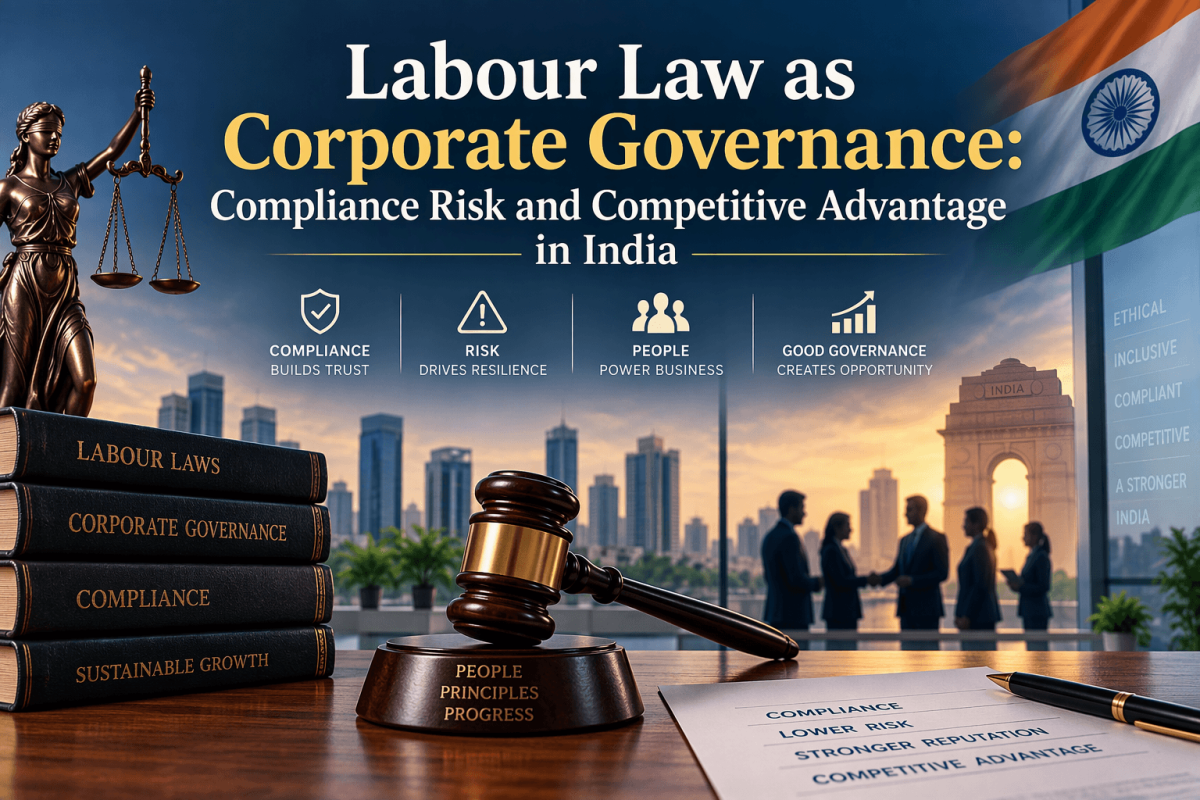
Labour law has a habit of being parked in the compliance folder. It is treated as a back-office cost, a set of registers to maintain and returns to file. That framing is not just incomplete. It misreads where the real exposure sits.
A more useful way to think about labour law is as a governance function. It shapes cost structures, workforce stability, litigation exposure and reputation. In India, that argument has become harder to ignore after the consolidation of 29 central labour statutes into four Codes, brought into force in November 2025, with Central Rules following in May 2026. The Codes do not merely tidy up old laws. They change how wages are defined, how fixed-term employment works, how contractor liability flows back to the principal employer, and how social security extends to gig and platform workers.
The governance dimension is visible elsewhere too. Corporate disclosure rules now require board-level reporting on workplace sexual harassment complaints and maternity benefit compliance. ESG reporting frameworks for listed companies treat workforce practices as a board-level disclosure item, not a reputational afterthought. Directors carry duties that extend to employees as well as shareholders. Labour compliance is no longer a parallel track to corporate governance. It is part of the same system.
For employers, the practical response is not to wait for perfect clarity. Map obligations establishment by establishment. Review compensation architecture against the revised wage definition, because the difference between a low basic pay structure and a compliant one can be significant for provident fund and gratuity outflows. Audit contractor chains for licences, wage payments and statutory remittances, because failures upstream can travel downstream. Assign clear ownership at a senior level and monitor state-level rules as they evolve.
The strategic payoff is not abstract. Fair pay, secure conditions and functioning grievance channels tend to lower attrition. Strong compliance supports access to capital and supply chains where buyers and investors now ask questions. Preventing disputes is cheaper than resolving them. Compliance costs money. But the real choice is between a managed cost and an unmanaged risk
Disclaimer: This post is provided for general informational and awareness purposes only. It does not constitute legal advice, a legal opinion, or a substitute for professional consultation. The discussion is based on publicly available commentary and reported developments and may not reflect the final legal position in every jurisdiction or for every establishment. Labour law in India is fact-specific and depends on state rules, thresholds and the nature of the workforce. Employers and advisers should verify the applicable texts, rules and judicial developments and seek advice from a qualified labour law professional before taking any action based on this content. The author and publisher disclaim any liability for any loss or damage arising from reliance on this information.