 Total Visitors
 Online Users
 Today
 Yesterday


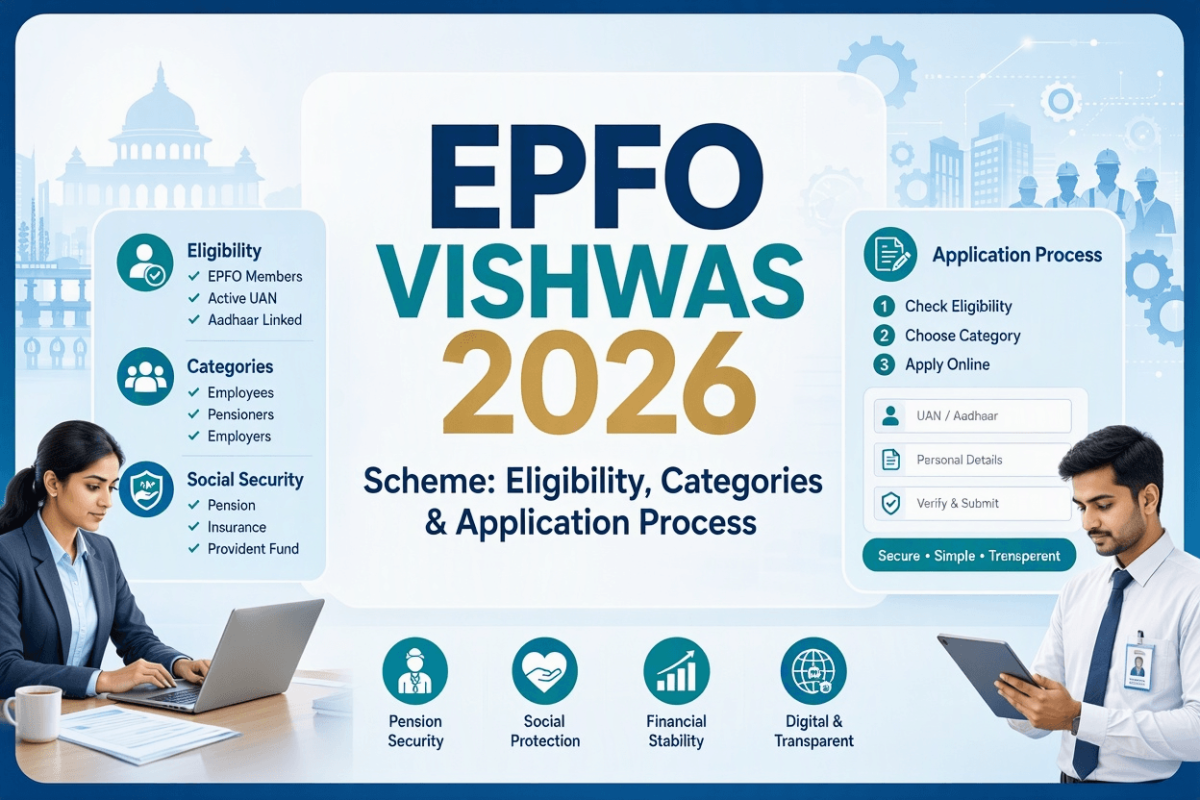
The Employees’ Provident Fund Organisation (EPFO) notified the VISHWAS 2026 scheme on June 29, 2026, creating a six-month administrative corridor to resolve legacy penal damages. Designed to clear protracted litigation, the scheme allows employers to settle historical damages levied under Section 14B of the EPF & MP Act, 1952, at significantly reduced flat rates. The application window permanently closes on December 28, 2026.
Core Eligibility Criteria & Mandatory Pre-Conditions
VISHWAS 2026 offers financial relief on administrative penalties, but it is not a blanket amnesty program. It provides zero waiver on the principal EPF contributions or the statutory interest.
- Strict Cut-off Date: The scheme applies exclusively to PF remittance defaults that occurred on or before June 14, 2024. Any default registered after this date is entirely excluded and attracts standard, aggressive statutory penalties.
- The Section 7Q Mandate: Before an employer can submit an application for reduced penalties, they must pay 100% of the statutory interest accumulated under Section 7Q of the EPF Act.
- Absolute Exclusions: The scheme strictly excludes establishments where Section 14B damages have already been fully recovered by the government. It also bars cases involving deliberate fraud, misappropriation of employee funds, or the falsification of corporate records.
The Four Qualifying Categories
Participation is voluntary. Establishments can apply if their pending Section 14B dispute falls into one of four distinct procedural stages:
- Pending Litigation Proceedings: Cases where an order is actively sub-judice before the CGIT, High Court, or Supreme Court. To secure the concession, the employer must submit an online undertaking to withdraw all pending appeals and writs regarding these damages.
- Finalized Orders with Pending Recovery: Cases where a final penalty order has been passed, but recovery (including active Recovery Certificate proceedings) is pending or only partially completed.
- Notice Issued (Pre-Adjudication): Cases where the EPFO has issued a show-cause notice proposing damages, but a final adjudication order has not yet been passed.
- No Notice Issued: Cases where EPFO records show a qualifying delay prior to June 14, 2024, but the department has not yet initiated formal proceedings or issued a damages notice.
Concessional Penalty Rates
When an employer qualifies, the historical sliding scale of damages is recalculated into flat monthly metrics, heavily capping the organization’s financial exposure.
| Duration of Default | Concessional Penalty Rate Under VISHWAS |
| Up to two months | 0.25% per month |
| More than two months and up to four months | 0.50% per month |
| Beyond four months | 1.00% per month |
The Digital Application Process
The end-to-end settlement process is paperless and executed exclusively via the EPFO Unified Employer Portal.
- Clear Statutory Arrears: Generate a separate Section 7Q challan and remit the mandatory interest in full via the ECR payment gateway.
- Access the Module: Log into the Unified Employer Portal and navigate to the dedicated VISHWAS 2026 module.
- Enter Case Details: Select the appropriate qualifying case category and input the reference details from previous departmental notices or orders.
- Upload Documentation: Upload all relevant notices, prior challans, and the Digital Signature Certificate (DSC) signed legal undertaking to withdraw any active litigation.
- Submit and Await Sanction: Submit the application using a DSC or e-Sign. The Regional Provident Fund Commissioner (RPFC) will verify the documents electronically and sanction the recalculated damages.
- Final 15-Day Remittance Window: The employer must deposit the exact recalculated penalty amount within 15 days of portal approval. Failing to make this payment within the 15-day timeframe results in the immediate cancellation of the application.
When an employer applies for the VISHWAS 2026 scheme to settle historical Section 14B damages, they may have already made partial payments toward those damages. This often occurs when partial recoveries were executed by the recovery officer or when the employer made mandatory pre-deposits to file a statutory appeal.
The EPFO adjusts these historical payments against the newly recalculated VISHWAS liability through two specific mechanisms:
1. Direct Partial Payments and Recovery Certificate (RRC) Recoveries
If an establishment has previously paid a portion of the Section 14B damages directly, or if the EPFO Recovery Officer has already recovered a partial amount through bank attachment or Recovery Certificate (RRC) proceedings, these amounts are factored into the final settlement.
- The Calculation: The portal automatically recalculates the total damages using the concessional flat monthly metrics (0.25%, 0.50%, or 1.00% depending on the default duration).
- The Adjustment: The employer is fully credited for the sum already paid. The establishment is then only required to remit the balance differential between the new concessional liability and their previous payments.
- Timeline: This remaining balance must be remitted within the strict 15-day approval window to successfully close the matter.
2. Statutory Pre-Deposits Under Section 7-O (Appellate Tribunal)
Under Section 7-O of the EPF & MP Act, employers challenging a Section 14B order before the Central Government Industrial Tribunal (CGIT) are typically required to deposit up to 75% of the assessed damages as a pre-condition for the appeal to be heard.
- Appropriation of Pre-Deposits: These statutory tribunal pre-deposits are not lost. Under the VISHWAS scheme, they are explicitly appropriated (credited) against the final sanctioned settlement amount.
- Withdrawal Condition: The credit of these pre-deposits is strictly contingent upon the employer providing formal, documented proof that the pending appeal has been officially withdrawn. Once the appeal abates, the pre-deposit is adjusted against the VISHWAS liability.
Important Considerations on Refunds
While partial payments are credited, employers must approach the recalculation with realistic financial expectations regarding refunds. If the amount previously paid (either through aggressive partial recovery or a large Section 7-O pre-deposit) actually exceeds the newly recalculated VISHWAS liability, employers should not assume that the surplus historical payment will be automatically refunded or freely adjusted against other separate PF liabilities. The scheme’s primary intent is to settle outstanding disputes and cap future exposure, not necessarily to issue refunds for punitive amounts already absorbed into the statutory fund.
Disclaimer: The information provided in this article is for educational and informational purposes only and does not constitute legal, financial, or tax advice. Statutory compliance and payroll regulations are highly fact-specific and subject to ongoing legislative changes. Employers and practitioners must consult with qualified legal counsel or a registered compliance professional before withdrawing active litigation or taking action based on this material.